The Book of Noticing VEXATION!


tent caterpillar moth Andy Reago

Malacosoma americana (tent caterpillar moth) courtesy of Andy Reago & Chrissy McClaren on Flickr 

I live for watching nature, hearing its embedded poetry, and waxing enthusiastic about it, hence The Book of Noticing. But on one of those hot days recently (before the chilly, rainy snap returned), I was at a loss for conjuring picturesque images with clever turns of phrase. Mosquitoes found me and buzzed about the delectable main course that was me. They dug in with gusto. ICK! (insert expletive here).

I’ve been sympathetic to other maligned creatures, most recently the marginalized gypsy moths and tent caterpillars. After all, they are just chewing what they were meant to chew, aren’t they? Observing the mother gypsy moth’s carefully fashioned egg cases, often moth-shaped and fuzzy with hair from the female’s abdomens, made me more sympathetic. I also like to watch the tent caterpillars over time, as they grow by impossibly fast leaps and bounds in their gauzy nests. And both types turn into something that flutters gently about, soft and benign if not an especially stunning photo-op.
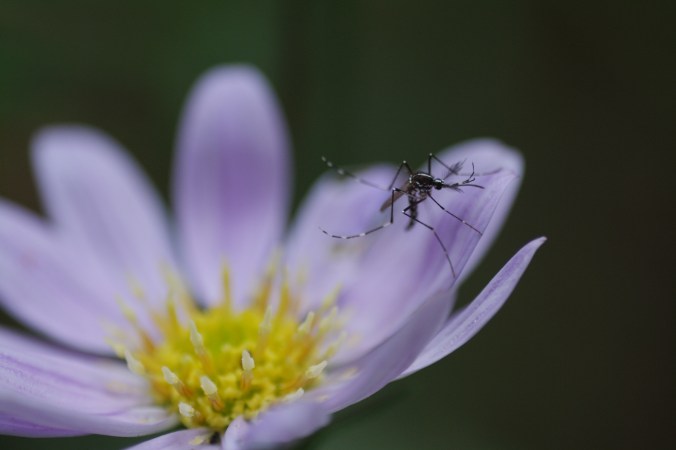
K Yamada mosquito.jpg

Perhaps the most flattering portrait of a mosquito, EVER, courtesy of K Yamada on Flickr 

But I can’t feel very sympathetic about the mosquito moms. According to the DC Mosquito Squad, our blood is “the perfect prenatal supplement for growing mosquito eggs.” Even though I know what it’s like to need a prenatal supplement, and to have babies (well, baby), all I can think is ICK!! I am not willing to scratch and grow welts and possibly contract a disease in the name of mosquito reproductive heath. Factoid: I learned that the very trait that makes me such a desirable blood donor, an O positive blood type, is apparently a real draw to mosquitoes, too. At least they don’t call me as often as the American Red Cross does.

Gavin had a picture book called The Naming when he was little, about the Garden of Eden. We brought it home from the beloved Niantic Book Barn. Each creature in the book was given a name, and a prophetic description. The lion was described as “splendor,” and the fleas that came along later (right after the dogs, of course!) were dubbed “vexation.” (Aside for the book lovers: this book’s author and illustrator were both prolific producers of some wonderful stuff!)
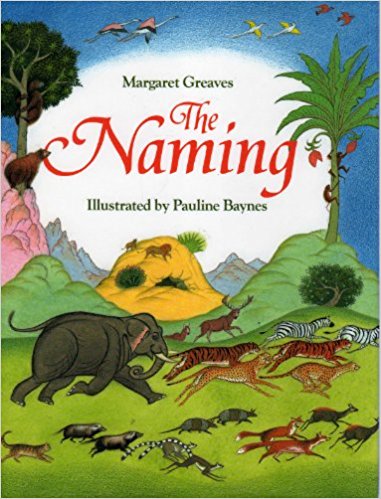
The Naming

Ah yes—vexation in nature! We’ve all experienced that—the mosquito and the tick, the copious sweat on our faces during a humid day, the blisters that well up as we walk that trail that would have otherwise been blissful (not blisterful). What about the roots we trip over; the cobwebs that greet us like a succession of invisible, sticky finish lines; the sharp pebbles on the bottom of the cool stream bed?

You might wonder if I am aiming to send would-be nature lovers back inside for some air-conditioned binge watching. Have I converted from nature writer to nature reviler?

Actually, I’m writing about genuine love. If you really love someone, especially over a long period of time, you come to see that person in a true light that is not always flattering: you know they get cranky, even mean sometimes. You know they have this blind spot, and that one. And a maddening tendency to tell the same stories ad infinitum. And they pick their nose. And they laugh too loud in restaurants. And there are some super-weird tendencies in their family tree. But you also know that they are tender and generous and funny and sweet and a fine specimen of a human. And they would do just about anything for you, if you wanted them to. You sign up for the whole package, because, when you take all of it together, it’s a stupendous gift.

For me, loving nature is like that. It is loving the mix of it all, even the parts I don’t understand or like. As with human relationships, there has to be common sense—it’s not smart to stay in harm’s way, and we can’t let ourselves be victims. And, also as with human relationships, I often find loving easier when I’ve developed a deeper understanding.
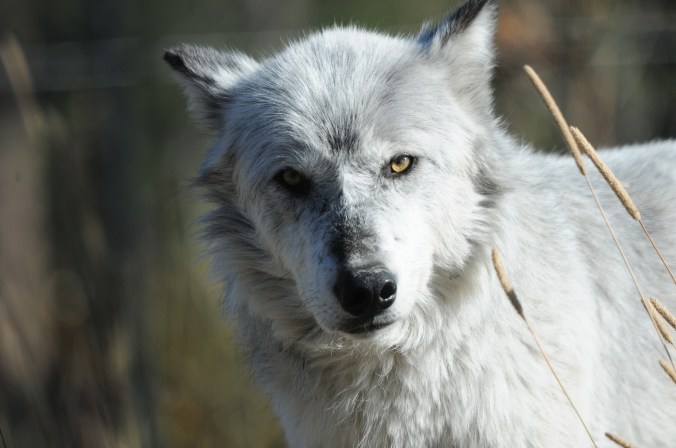
Wolf at Yellowstone Michael McCarthy.jpg

Wolf at Yellowstone courtesy of Michael McCarthy on Flickr

Even the least – and least attractive –  creatures play a part in the ecosystem. Here’s an example from Yellowstone National Park, about how the reintroduction of wolves continues to have reverberating effects on so many creatures.  I’ve written about how we are often more sympathetic to bigger creatures, versus gnats, mosquitoes, voles, mice, etc. Somehow it seems we can feel, or at least imagine, the pain that wolves or bears or other, fairly sizeable creatures might feel. Could it have something to do with being able to look them in the eyes?

While we are working on being more Zen, more all-knowing and all-magnanimous, like this guy…
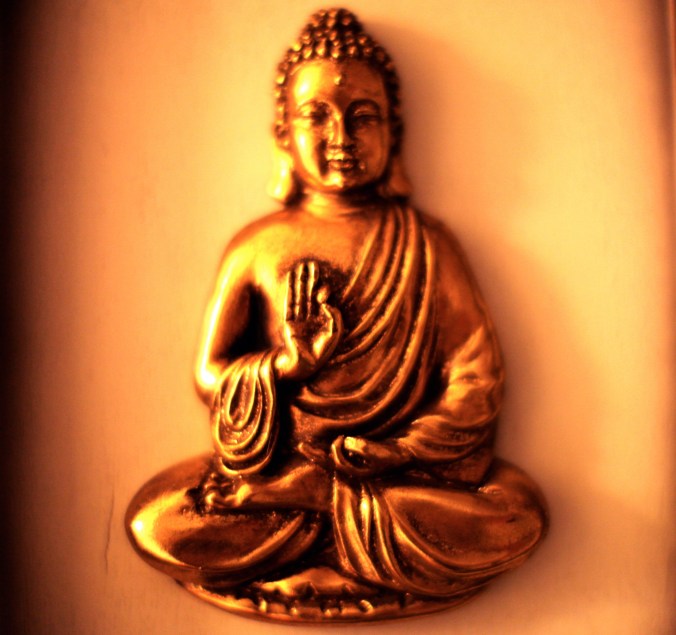
Buddha by Kaysha

Buddha courtesy of Kaysha on Flickr


…Maybe it’s easier, with the teeniest, and the more “icky” creatures, to think about what would happen if they were not around, with our interests in mind. This piece talks about how the ecosystem would actually suffer without mosquitoes. Ticks, also, are an essential food source for many creatures.

That’s today’s food for thought, even as we remain potential food for many of our co-inhibitors of the planet. And now, because I can’t quite muster the generosity and equanimity to post a picture of a tick, here’s a happy photo of a decidedly non-biting rhododendron.
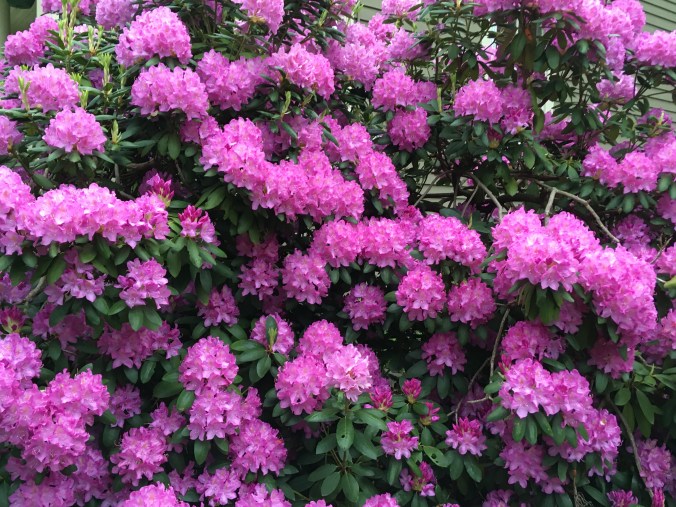
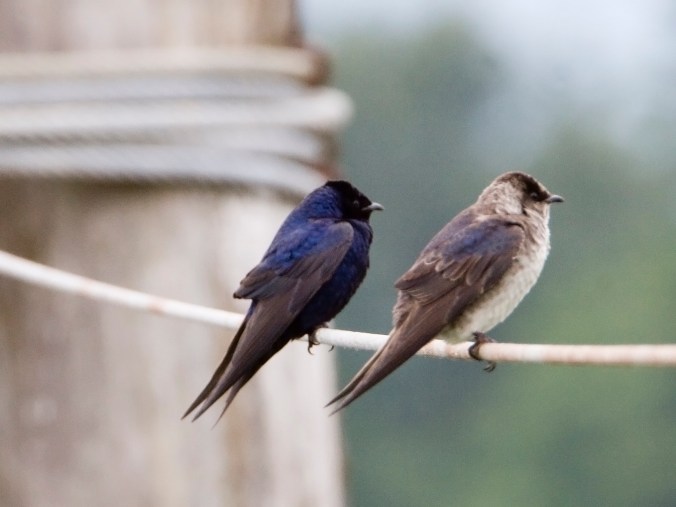
Photo May 28, 6 28 29 AM


In Praise of the Small: Swallows, Dune Toads, and Caterpillars

purplemartin by Rich Leche.jpg

Purple Martins courtesy of Rick Leche on Flickr

Today I checked off a longstanding item on my bucket list of local endeavors. I jumped into my jeans and hurried out of the house to be in Madison by 7:50, where I met with fellow bird lovers in The Audubon Shop parking lot. I met author/illustrator Patrick J. Lynch, and he autographed my new copy of A Field Guide to the Long Island Sound. I’ve lived on both sides of the Sound, traversing many of its rocky beaches, and it seems only fitting that I should, at long last, own a detailed manual about its non-human inhabitants. The group formed a caravan at Hammonasset Beach State Park, driving short stints to favorite bird haunts in the park and learning from Lynch and shop owner Jerry Connolly.

The Purple Martins filled my heart. The sheen on the males caught the light, and the couples seemed to be performing a musical for our benefit, flying to and fro as we stood with our “opera glasses” and took in the spectacle. I learned that they winter in South America and come back to the exact same “condo” bird houses every spring, where they nest in great colonies. When I looked them up later on All About Birds, I learned that man-made Martin houses used to be really abundant. John James Audubon used them as a gauge for his lodging prospects when traveling, noting: “Almost every country tavern has a martin box on the upper part of its sign-board; and I have observed that the handsomer the box, the better does the inn generally prove to be.” Should we start a movement to bring back the universal Martin box, especially at inns? Wouldn’t looking for the birdhouses be infinitely more fun than hotel ratings Web sites?

Fowlers frum US fish wildlife.jpg

Beach bum Fowler’s toad courtesy of USFWS on Flickr

I was taken with a modest, marshy pool adjacent to the pavilion’s parking lot. Although we only spotted a few tadpoles, Lynch gave us a lesson on Fowler’s toads, which, unlike the better-known American toads, like to hang out in sand dunes. His book says that they bury themselves in the sand to escape the heat. How many Fowler’s toads did I unknowingly step over as I roamed around Jones Beach and Point Lookout and Caumsett and Welwyn Preserve in my youth? As we learned about the toads, a flurry of bright blue tree swallows stole center stage, appearing to perform for us but in actuality chasing insects. The morning brought more finds, including Least Terns (endangered) and American Oystercatchers and Brants. I couldn’t work my phone camera by the end of the walk, as my hands were surprisingly numb from the wet chill. But it was worth the temporary paralysis.

tree swallows Michael Mulqueen.jpg

Embarrassment of tree swallows courtesy of Michael Mulqueen on Flickr

On the way home on Route 9, warming alternate hands over the heating vents, I once again noticed a particular, still quite bare, tree, which boasts the most tent caterpillar abodes I’ve ever seen in one place. I looked up the Eastern Tent Caterpillar, and found what I expected on a college entomology site: Malacosoma americanum is described as a pest with “unsightly silken nests” that feeds on (but doesn’t usually defoliate) trees, going on to say that “they are a nuisance and can create a mess when they are squashed on driveways, sidewalks, and patios.” Those lucky enough to survive our feet and cars and predators (which I bet they consider a nuisance, at the very least!) transform into rather ordinary-looking moths.

The tree caterpillars reminded me of gypsy moth caterpillars, another one of God’s “creatures great and small” often viewed as an outcast, despite the fact that ominous sounding “outbreaks” are very often limited by nature, such as the fungus that counters the gypsies. (I wrote more about gypsies here).  Both tree and gypsy moth caterpillar eggs overwinter under ingenious protective coatings, and it seems miraculous to me that they make it to spring at all. In The Book of Noticing (officially launching Tuesday!) I wrote about peering and tracking and researching “even the common gypsy moth,” and this reminds me that, despite my generally sympathetic attitude, I don’t necessarily fully value the lives of the moths who lay their eggs and flutter to the ground to die each summer, at least not on par with other, usually bigger and more visually pleasing creatures. This is something for me to think about. Can I cut off the branch of my neighbor’s tent caterpillared-tree and bring the innocents, just doing what they were born to do, off into the woods somewhere, far away from the garden, sparing them from destruction?

Tent caterpillars.JPG

New life amid new life

Caterpillars are not pretty in the same way that Purple Martins are. But they fascinated me when I was a child, their suction-cuppy feet traversing my arm, tickling its tiny hairs. Can we make more room in the world even for creatures who don’t make us want to cuddle? Even for those creatures, like many-eyed or hairy-legged spiders, who sometimes make us want to run? They are living their lives, too, and have their place. They, like us, can be so misunderstood. Could they teach us more about compassion?

As I wrote this I kept hearing a small vibrating noise and assumed it was rapid raindrops riding the edge of the gutter. But my eye caught a white moth here inside, fluttering her wings at an impossible speed. Was she trying to dry off? She rode my forearm for a while, then lifted off to the windowsill. Another small creature who so often goes unnoticed, and this one has already been through several stages of her life, like me. She catches the light beautifully. She craves it just like I do.

What We Know

(This week’s post is a guest blog from Shawndra Miller, an admirable writer and energy worker. I’ve also contributed some words to her blog–fun to expand horizons!)

Katherine asked me to contribute a guest post to her blog, and I am honored to do it. We share a reverence for nature and, I suspect, an openness to nonmainstream ways of moving through the world.

I appreciate the detail of Katherine’s observations on her outings, and the way she melds a sense of the sacred with familial and practical concerns. We share that too. And I’m excited to see her book come out in May!

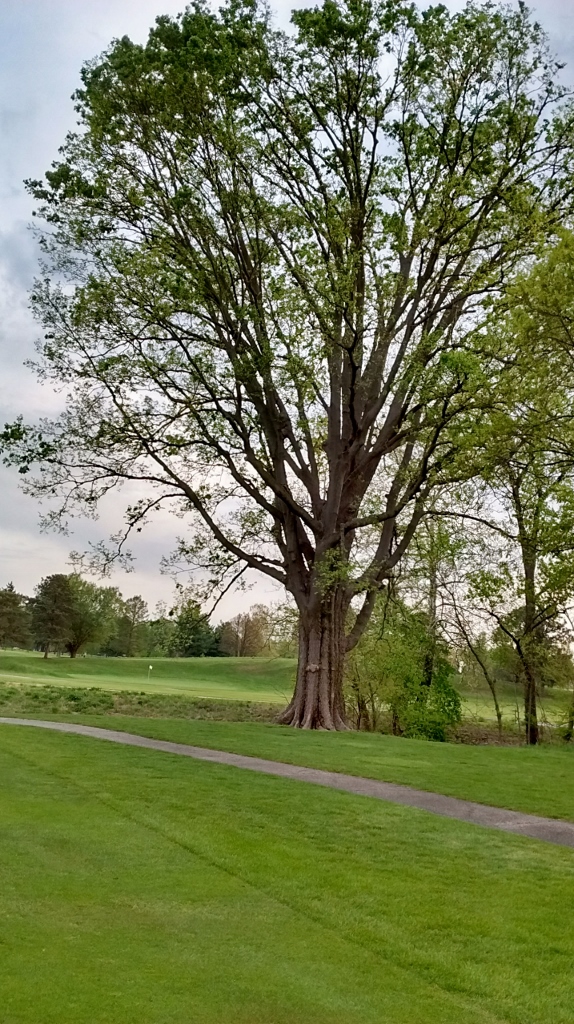
So for her blog, I thought I would write about a beloved tree that I encounter every morning when I walk my dog.

IMG_20170426_072411598_HDR (574x1024)

The Venerable Hackberry Tree

Every day, I commune with this aged hackberry tree. It feels like it might be the wisest being for miles around. I’m grateful that I live a few blocks from this tree, which is somehow more-than-tree, but Presence.

IMG_20170426_075332447_HDR (576x1024)

Good morning, Beautiful Tree!

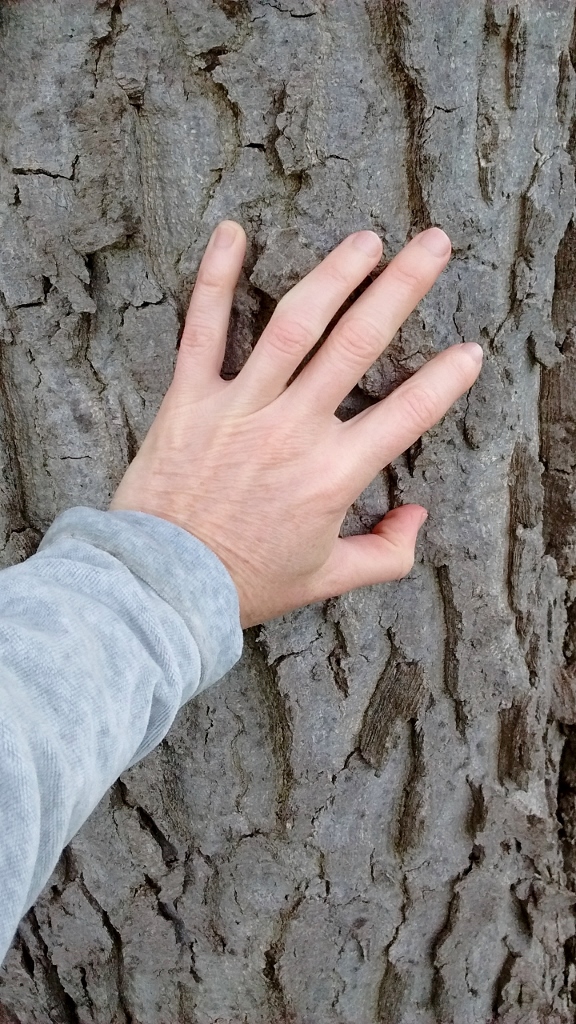
If I’m late, I blow a kiss as my dog and I pass by. If I’m not in a hurry, I rest my spine against its rough bark. A young hackberry is said to have “corky” bark, but this grand old tree has a skin more like spiny. Its toes spread at the base allowing me to nestle my feet between them on the bare earth. Never mind bits of broken glass from some disrespectful passerby.

Spine to spine, then.

Then it’s just about listening, or sensing. Sinking into beingness.

IMG_20170426_075600946 (576x1024)

Melding

I imagine I can merge my particles with the tree’s particles. No, I know I can. We’re each just a whirling cloud of tiny specks floating in vast space. Energy touching energy, vibration touching vibration.

IMG_20170426_075532868_HDR (576x1024).jpg

A universe in its bark

Contacting this reality—something I love to teach my clients and students—returns me to a sense of the timeless. Feet rooted, body near-weightless. The sensation of Oneness comes easily in the presence of Tree.

Tree time is so different from human time. That’s what comes to me as I gaze up into its branches.

IMG_20170426_075750150 (576x1024)

The view from down here.

And this: I don’t expect to know or understand any damn thing, standing here.

As this Pablo Neruda poem says,

What we know is so little
and what we presume is so much
and we learn so slowly
that we ask and then we die.

What a relief, to give in to not-knowing. To no longer opine or whine or conclude.

IMG_20170426_075857326.jpg

Opal worships me while I worship Tree.

Tree has no agenda but life. The birds in its boughs spin out their short destinies. I stop and touch, stop and look up, offer my thanks, move on into a morning of work and words.

And I wonder. How big is a tree’s aura? How far does this particular tree’s energy field extend? Is it possible that as I sit here at my desk down the street, writing of Tree, that Tree feels me? That I am sitting within Tree’s aura?

Shawndra Miller is a writer and energy worker who lives in Indianapolis. She writes about changemakers at the leading edge of eco-agriculture for Acres USA and Farm Indiana. A certified ThetaHealer®, she offers one-on-one energy work, classes, and collaborative events that connect people to a wider sense of what’s possible in their bodies, energies, lives, and the larger world. Her lyric essays and poetry have appeared in Confrontation Magazine, The Boiler Journal, and The Lavender Review. She is currently working on a nonfiction book that links her healing journey to wider societal healing, represented by a farm built atop the buried remains of a 19th century women’s mental institution.