Join the Club (Moss)!

One of the best things about being out in nature is the absolutely limitless supply of opportunities to learn. On par with that plus are the many reasons for hope and delight to be found in places as seemingly humble as the forest floor.

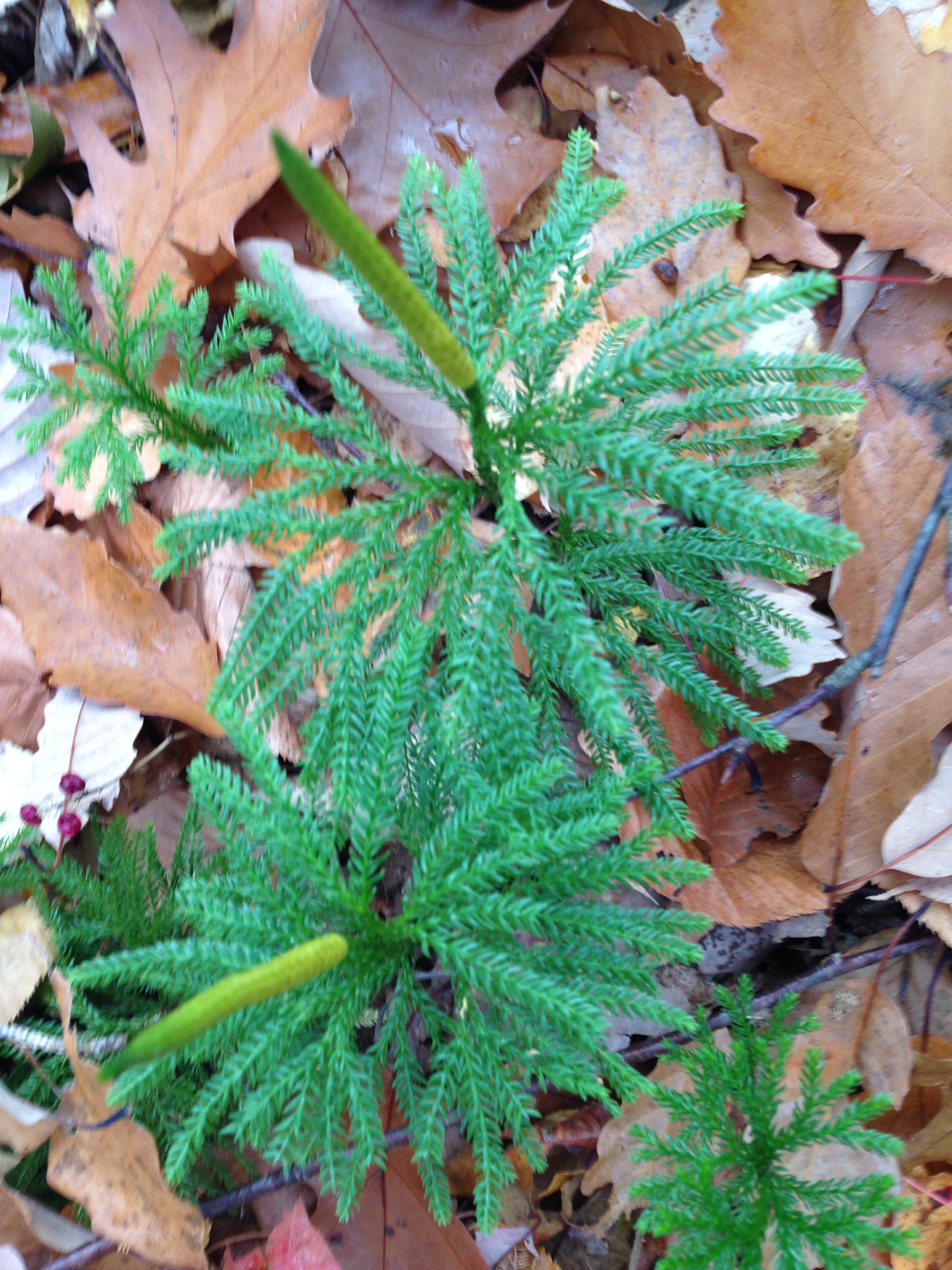
My latest study—and also hopeful venture—is club moss. This link leads to the inaturalist page for Connecticut club moss sightings. I am particularly enamored of running pine moss, which really does look to me like a little figure that’s about to dash off a la the Gingerbread Man of childhood story books (it’s pictured in above link)! But most often, in the Cockaponset State Forest behind our house, I see princess pine:

2015-11-05 07.54.11

According to inaturalist its spores used to be used as flash powder (in early photography or magic tricks ). I know if I tell Gavin he’ll want to try that out pronto, and preferably with bushels of spores. Come to think of it, some adults I know would be right on that, too. (Can’t vouch for how to do this, or for safety. Also, some states list the plant as endangered, likely a result of earlier enthused harvesting.)

This Massachusetts land trust’s site has a nice write-up about the princess pine. What I like best about this diminutive species, which is not a pine at all, is its evergreen-ness. It comforts me when I think ahead to the depths of winter. It is also such a pretty and precise-looking plant.

Before I read The Beginning Naturalist by Gale Lawrence, I’d assumed that the princess pine and other similar club mosses were baby evergreen trees. But they are already fully grown, and they are not in the conifer family. Confusingly, the club mosses are not mosses, either. They are closer to ferns. The “club” refers to the club or spike that shoots right up from the plant—it is coated with a fine layer of spores. The growth from spore to mature plant takes a full 17 years, but some plants can also grow by sprouting along the same stem.

Gale Lawrence’s chapter on these plants amused me, because she refers to the “attacks of the Christmas decorators.” Determined crafters let loose in the woods can pull up whole long underground stems of club mosses for weaving into wreaths, wiping out that impressive life cycle with one good yank. Even without the greenery of Christmas in mind, it is a bit tempting to imagine taking one of these miniature (non) trees home. But the happy-seeming plant has worked too hard to become a pet. Best to visit it in its “home in the loam,” beside its mushroom, acorn, and looming tree neighbors.

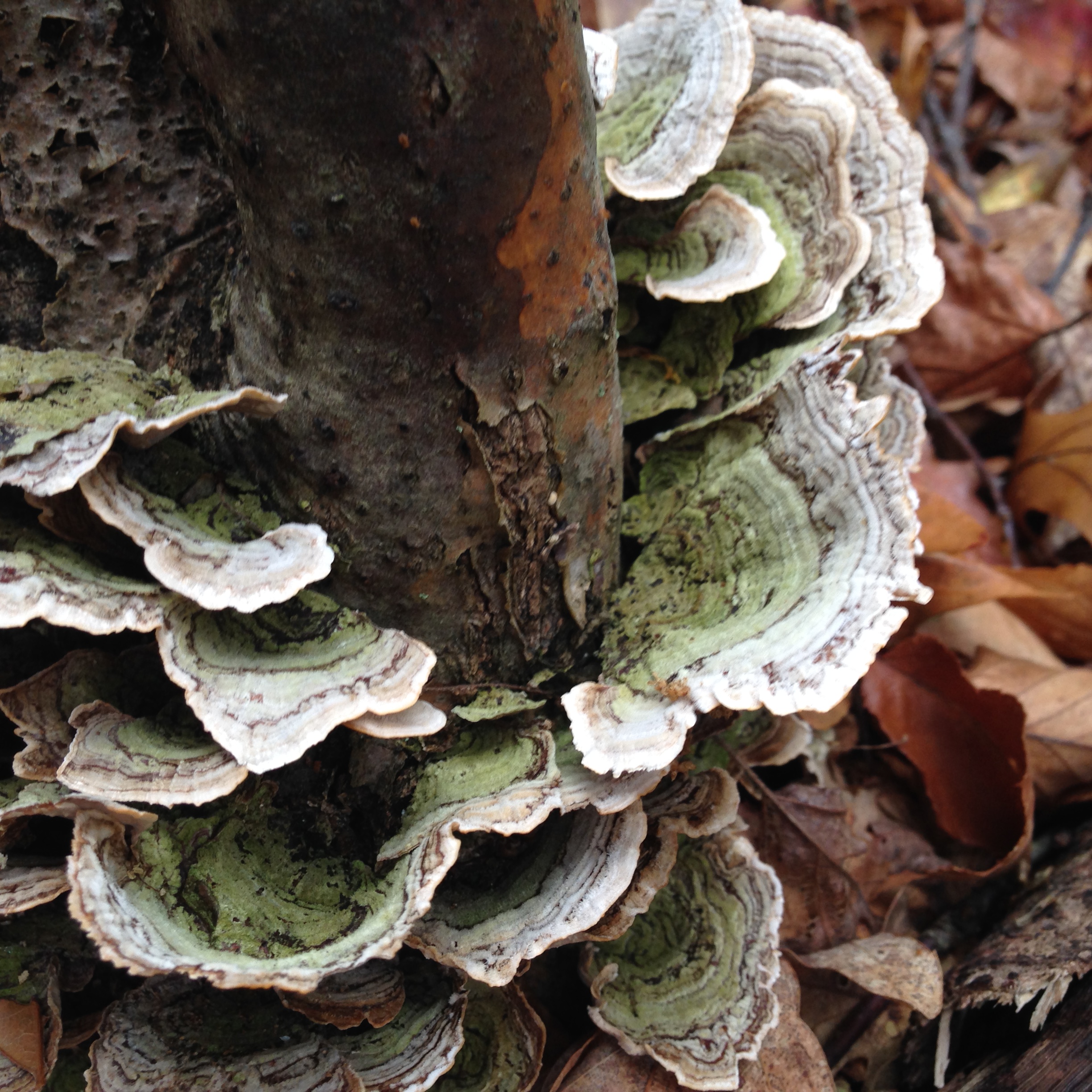
BONUS photo for those who read to the end! 😉 : the decorative lichens (or could they be mushrooms??) adorning a stump in our yard! This is just a bit blurry, but I can’t be the only one who thinks these are simply gorgeous.

2015-11-10 07.25.39


Indian Summer: Just 9 Days

Web photo (mine)I’ve tossed the term around since first hearing it in childhood: Indian Summer, indicating a surprisingly warm period after we’ve already had a cold snap. Well, I got the general idea right. But according to The Old Farmer’s Almanac, Indian Summer must technically fall between November 11 and November 20. So as I write this, we’re almost at this very specific window, although I do wonder if the Almanac people do any adjusting in light of climate change! There are more criteria than just dates, though:

“As well as being warm, the atmosphere during Indian summer is hazy or smoky, there is no wind, the barometer is standing high, and the nights are clear and chilly…The time of occurrence is important: The warm days must follow a spell of cold weather or a good hard frost.”

Why the term “Indian?” The Almanac’s prevailing opinion is that it refers to how the Native Americans could have “one more go” at the early New England settlers when the weather turned warm again. I prefer the story about the early Algonquians’ belief that the warm weather was sent by their southwestern god, Cautantowwit.

lichenWhether or not it’s fallen into the prescribed time period, creatures great and small here in Connecticut have been enjoying this reprieve from the autumn chill. Just a couple of weeks ago I awoke to find our porch begonias dead from the overnight frost, their rosy blossoms “bleeding” onto our yellow railing. But then it turned positively balmy again. Over the last week or so I’ve seen bees lingering over the asters. I photographed a jewel of a spider’s Web on our front hedge. And I’ve walked through the Cockaponset (conveniently located behind my home), admiring its generous décor of mushrooms and lichen. These moments, usually grabbed after Gavin gets on the bus and before I have to drive to work, are deeply appreciated as the days get shorter and the trees shout out their gold and orange songs.

One day, I was in a cranky mood and was positively stopped in my tracks by the gleaming gold in the afternoon sunlight outside. I really felt that I was being shouted at, reprimanded by beauty: how bad can it be when I’ve got this display right outside my door?

gold leaves

Robert Frost said it best: nothing gold can stay. But isn’t that why we treasure it so?:
Nature’s first green is gold,
Her hardest hue to hold.
Her early leaf’s a flower;
But only so an hour.
Then leaf subsides to leaf.
So Eden sank to grief,
So dawn goes down to day.
Nothing gold can stay.

A Trove of Seeds

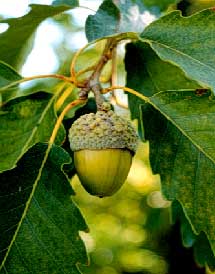
Chestnut Oak acorn, courtesy of U of Kentucky's Department of Agriculture page

Chestnut Oak acorn, courtesy of U of Kentucky’s Department of Agriculture page

Last week, a coworker gifted me with a jumbo-sized acorn. She’d wanted to work outside for a little while, but had to come in because the oak tree above the picnic table was dropping these plump seeds in an urgent and generous rain. Even walking across the grass had become a challenge, as if navigating a small sea of ball bearings. I hadn’t thought much about it before, but a quick Internet search told me there are quite a few kinds of acorns—I think this one was a chestnut acorn. (Here’s a link to an iconic chestnut oak specimen in Clinton, CT–I hope it’s still there!). Our local oaks seem to be having “mast years,” dropping huge volumes of their offspring after a season of favorable weather and ramped up production.

Seeds buok imageMy acorn research coincided beautifully with my latest read—Seeds by Richard Horan. The author traveled around the country, visiting trees that inspired famous American writers as well as other notables. He scooped up samples of many trees’ progeny, sometimes on a solo journey, sometimes with family or friends. I’d like to ask him what became of the resulting plantings. Is there, somewhere closer to home than Monroeville ( Alabama’s literary capital), a Harper Lee chestnut that I can visit?

Chilly Walk photo from Chris Ford on Flickr

Chilly Walk photo from Chris Ford on Flickr

I liked what one of Horan’s friends said: “You know, when you initially arrive at a site, you think there’s nothing there, but after spending a little time looking around, trees begin to appear.” Of course, our silent observers are always there, often assuming a strictly background role. Many precede us, and many will survive long after we are gone, so I regard them as wise and infinitely patient, owing to their long lives and inability to walk away. I like what Willa Cather (one of the many authors featured in Seeds) had to say about them, too: “I like trees because they seem more resigned to the way they have to live than other things do.” I am not so sure (forgive me, Willa!) that I would have chosen the word “resigned.” Maybe, after all these years the resigning has evolved into accepting. John Muir was more optimistic: “I never saw a discontented tree.”

This season is often thought of as a time of winding down, but time outside reminds me that so many creatures are hurriedly proliferating before the cold and stillness of winter wreaks a time of suspended animation for many. I’ve noticed gypsy moth pupae in the trees around my office park, a bit concerned because I don’t think it’s the right season and I know they can fall prey to all manner of infections. I’m fully aware that these insects are considered pests, but observing them in recent years has made me more sympathetic. I like the moth-like shape of their felted egg masses and wonder how many will survive the winter.

Gypsies and their kids at Trail Wood

This, too, is the time for planting bulbs—something I too often forget to do. I am especially taken with one advertised: The Poet’s Daffodil. I like the haiku-like description on the American Meadows site (line breaks inserted by me!):

Flowers are pure white with
a yellow cup edged in red.
Sweet fragrance

Poet's Daffodil, from Klasse im Garten on Flickr

Poet’s Daffodil, from Klasse im Garten on Flickr

Of what poet was this bulb’s namer thinking? I’ve no idea, but it just so happens I have a Robert Frost anthology beside me. My mom, whose memory and hearing are so very poor now, came alive when we took turns reading from it last Tuesday, this treasured corner of her mind not unlike a bulb that’s overwintered finally flowering. I’ve flipped to this Frost poem today. It reminds me of the inevitability, and often hibernating gifts, of bleaker seasons:


In Hardwood Groves

The same leaves over and over again!
They fall from giving shade above,
To make one texture of faded brown
And fit the earth like a leather glove.

Before the leaves can mount again
To fill the trees with another shade,
They must go down past things coming up.
They must go down into the dark decayed.

They must be pierced by flowers and put
Beneath the feet of dancing flowers.
However it is in some other world
I know that this is the way in ours.

Preserves and Professional Parks

path in woods startMy friend Chris asked me recently about my week-long nature writing residency at the Trail Wood memorial preserve, and the first two words that came to mind were “life-changing.” I reveled in the chance to be in nature alone for extended periods, to contemplate, to write and rewrite, to read the treasured words of Edwin Way Teale in his very home, his very office—a sacred place to me! For the first time ever, I used up the camera storage in my iPhone. This blog isn’t big enough to contain the wealth of images, so I’ve scattered a select few throughout the post.

butterflyfuzzy mushroom lichenOf course, Trail Wood had many creatures and plants that I don’t see every day. The Beaver Pond became my favorite destination, and one morning I watched one of the beavers having an early swim. I took photo upon photo of insects in both meadow and forest, but I wasn’t usually swift enough to capture the many birds digitally. I looked forward to daily sightings of the woodchuck who lived near the house. My suburban New York roots showing, I sang to myself in the woods and carried pepper spray just in case the reported resident bear didn’t like my performance. (Maybe the bear wasn’t as exotic as it seemed. There have been several reported sightings in Deep River neighborhoods recently!)

Teale cabinAn absolute gift of the preserve was its undisturbed quality. But another gift I took away from my time there is the practice of really looking and listening even in places that haven’t had the benefit of such thoughtful stewardship. I  take small walks around the office park where I work, not by any stretch a nature preserve. Still, I smile at the abundance of Carolina locusts behind the buildings (who don’t seem to be doing any noticeable damage), and the occasional spotting of a raptor, bright bird, dragonfly, or hornets. I look down into the wetlands below the tall hill. Once in a while, I see a deer. Just once, I rescued a young raccoon who was clattering around in the nearly empty dumpster, watching from a distance as he climbed the long birch limb escape ladder I’d lowered for him.

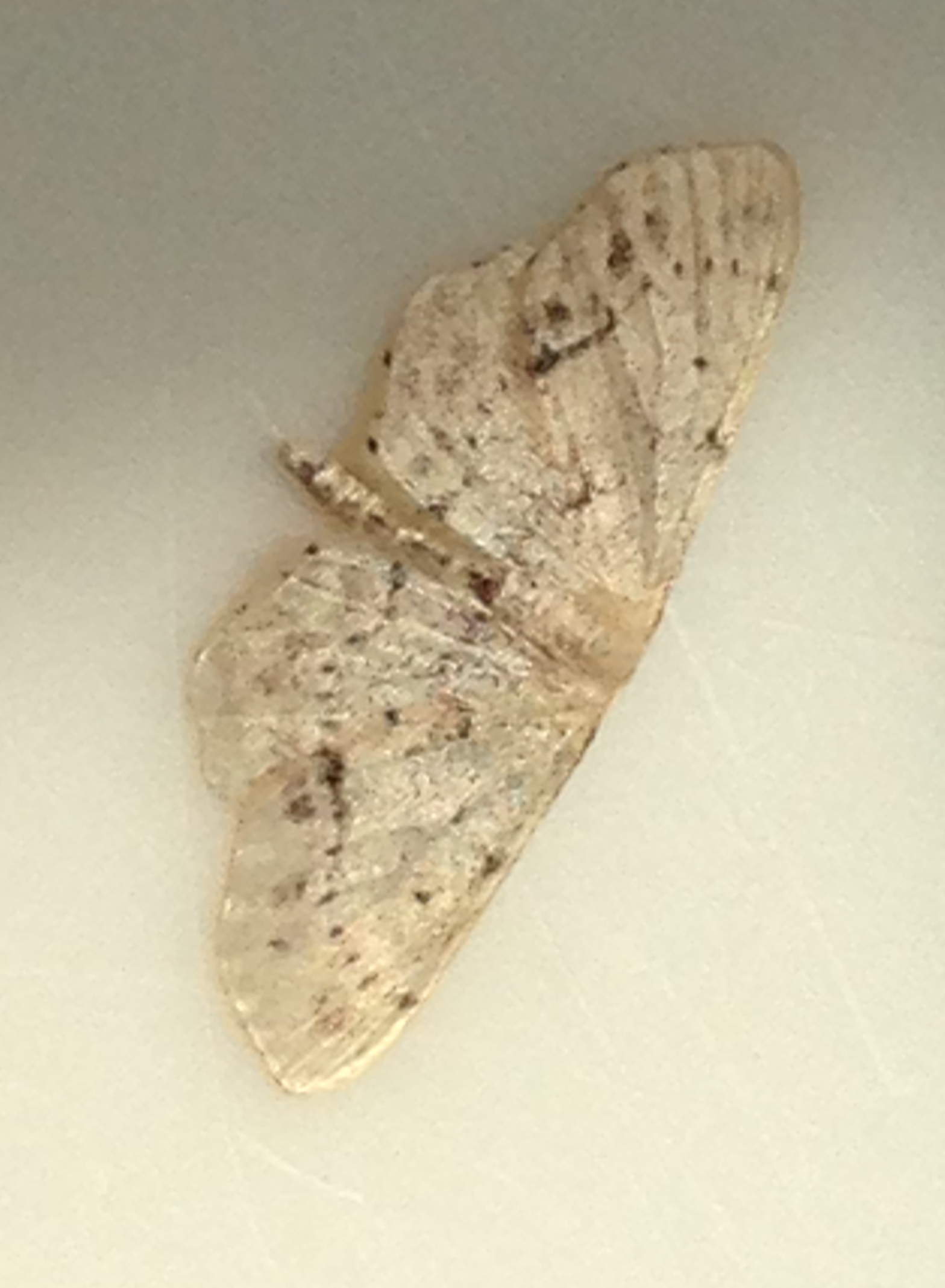
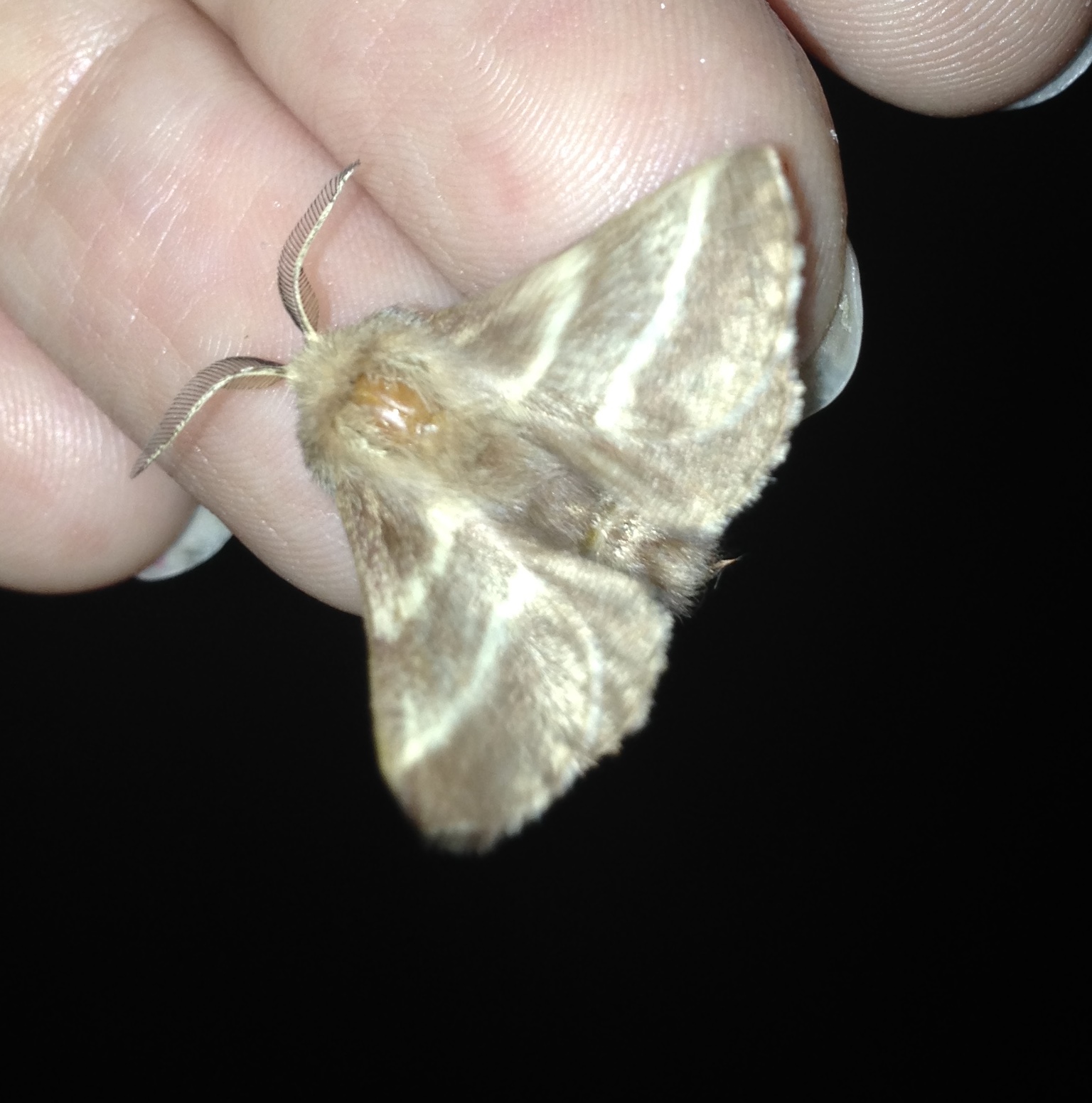
Just the other day, I snapped a picture of a delicately decorated moth (looked like the oversized Oriental vases my grandfather had around his house) who turned out to be an ailanthus webworm moth. I love it when nature comes right to my door!

alianthus web worm

While staying at the Teale home I was drawn to a book of Mr Teale’s that I hadn’t read before: Days without Time. The edition on the study shelf was dated 1948, just 3 years after his son David was killed in World War II. Teale’s introductory words ring so very true:

The fall of the tree, the swoop of the hawk, the tilt of the buzzard in a windy sky, the song of the hermit thrush at evening, the opening of a windflower, the eddy of a woodland brook—all of these are events for days without time. They might have occurred during any one of a thousand or ten thousand years. Ticking clocks and factory whistles have little to do with the eternal recurrence of these eternal themes.

Something for me to remember after my New Hampshire vacation, chock full of walks in shallow streams and visits to waterfalls: when the “factory whistle” is again in play, nature doesn’t live only in preserves or the areas we think of as great sightseeing locales. It is everywhere. With eyes and ears wide open, every day is a new chance to notice it, to give it the full attention that it deserves. With that attending we find ourselves more connected and more alive.

Moths, Mushrooms, and Umwelt

Lately, I’ve been reading Central Park in the Dark, by the same author (Marie Winn) who wrote Red Tails in Love. Her reports of a robust animal and insect world thriving right in midtown Manhattan are such a comfort to me. And they remind me that, with nature, there is always much more going on than what we notice at a casual glance.

white mothTake moths, for example. They have always loved my porch, but this year they are finding their way inside more, to the grow light that overhangs my modest crop of hydroponic tomatoes. They flitter their way into the sink way too often—are they seeking hydration or just attracted to the water’s glimmer? In any case, I have made valiant, if not always successful, efforts to rescue them. The antique milk can on the porch has become a moth rehab facility–a place where they go to dry out. Bonus fact, which I learned after writing a poem about moths alighting on my arms: they crave the salt in our skin! We might not think as kindly of them if they found ways to extract it the way female mosquitoes, or ticks, access what they find to be our most alluring qualities.

iridescent moth

I was reminded, however, by the Central Park book that most moths’ lifespans amount to less than a few weeks. This greatly saddened Gavin, so I told him about something else that I had learned about: the idea of umwelt. A musty but lovely second-hand book I found, The View from the Oak (Judith and Herbert Kohl), talks about a term used by another nature writer “to describe the world around a living thing as that creature experiences it.” Imagine, for example being an ant, living your whole life in a particular corner of a field, pebbles like boulders to you and your vibratory sense your only means of communication. That experience, that way of living and perceiving, is your ant umwelt. I apply that same concept to time, too. The moth that lives its full few weeks is likely not comparing itself with humans and crying over its piteously short stay on the earth. We humans have our own time umwelt, so we don’t tend to bristle over the lifespans of Galapagos Giant Tortoises, who live for upwards of 100 years (or Ocean Quahogs, who can live for 400+!).

Another umwelt I found myself wondering about was the perspective of the slug. Of course, I’ve seen slugs here and there throughout my life, but only on a recent jaunt at Fountain Hill did I notice groups of them sitting on mushroom caps.

mushroom with several slugs

Can you see the 4 slugs feasting?

How long did it take them to climb up there? Was it like summiting a high mountain peak? It made me wonder if slugs eat mushrooms, and the article I found from a 2010 issue of Fungi was called What We Don’t Know About Slugs and Mushrooms—the scientists seem pretty clear that slugs eat fungi but not so clear on specifics. One of the problems is that it’s the mushrooms, not the slugs, that are usually the subject of any the available photos that might prove slug fungus consumption, and most of the time photographers don’t want to photograph the slugs at all. It’s not just with most photographers that slugs get a bad rap—and I understand that they eat our garden greens—but I do think that if they were better looking they might be treated better. Hopefully in their own little slug umwelt they don’t realize how their slimy looks count against them. But if they do, Gavin reminded me that there is an Ugly Animals Preservation Society that they can turn to for support.

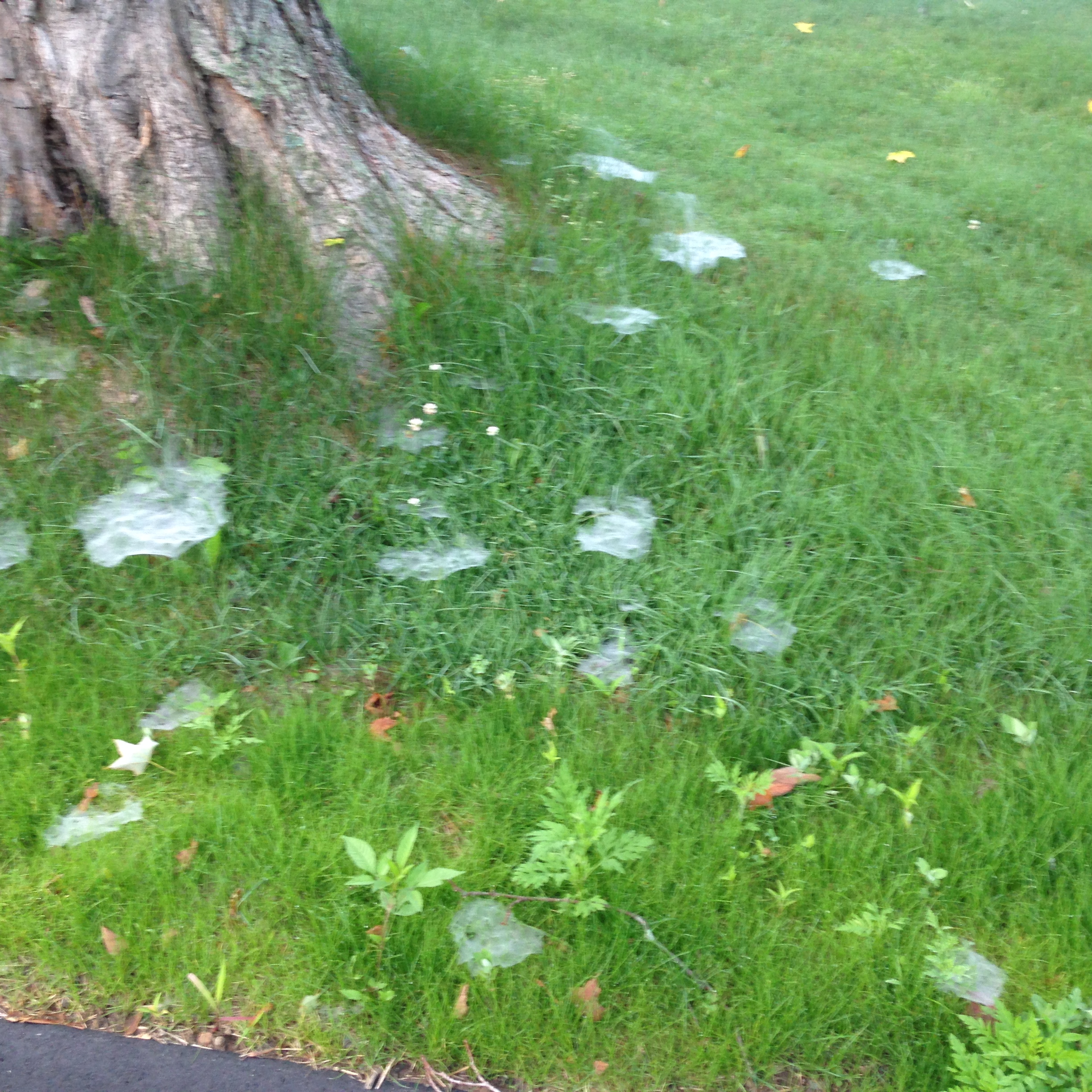
July is such a rich, moist, spilling-over-with-abundance time in Connecticut. This morning I counted 13 rabbits on my walk down to Town Dock, and funnel webs from the grass spiders, highlighted by the dew, dotted nearly every lawn—an uncountable array of spider condo complexes. My own, personal umwelt is a happy one because of this.

I count at least 19 funnel-shaped webs in this small patch of lawn

I count at least 19 funnel-shaped webs in this small patch of lawn

Why I Walk Early, and (Blog) Hopping into Spring

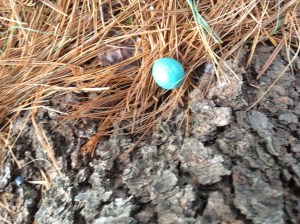
fallenRobin's eggI love my walks, so often crammed in before work hours or weekend errands. I love it when creatures become more prolific with the warmer temperatures and start to cross my path again in greater numbers. So many are busy making new families now. Soon flowers will be easier to find just by following my nose, and moths of every size and shape will crowd the front porch, greeting me when I first step out in the morning.

Mary Oliver wrote a stunning poem called Why I Wake Early, and that ran through my mind the other day before work, as I watched a rabbit’s white tail hop away into the brush, looked for fallen eggshells, and snapped photos of mourning doves and a red-winged blackbird in the branches. Why I walk early also merits an ode. Although I could wax wordily on about it, I’m keeping my explanation here mostly in the form of pictures for a change.

After the pictures comes my participation in a blog hop interview–my nomination was bestowed by my writing group friend Laurie Baxter, and it gives me a chance to say a little bit about my burgeoning book and my writing life. Laurie is a prolific writer, and I’ve enjoyed every play and story that she’s shared with me, as well as her boundless enthusiasm for words and life, generally. Most recently I indulged in her Kindle Veronica Mars novella–a fun and engaging read that brought me back to my guilty pleasure watching the series on Netflix. I’d love to be as spunky and clever as Veronica, or as Laurie, for that matter! I think this blog hop is mostly for fiction writers, so am honored that my mostly nature writing self has been welcomed in. (You know how that goes, though–now I am letting other nature-centric writers into the party!) Interview after the pictures, along with nominations for the next blog hoppers!

2015-03-29 16.13.51

Early spring visitors.

Pratt Cove. I spotted a vulture on a nest. The birders lining the railroad tracks told me that's what it was!

Pratt Cove. I spotted a large bird on a far-off nest, flapping its wings. The birders lining the railroad tracks told me it was a vulture!

Can you spot the red-winged blackbird. iPhone shot requires use of squinting and imagination
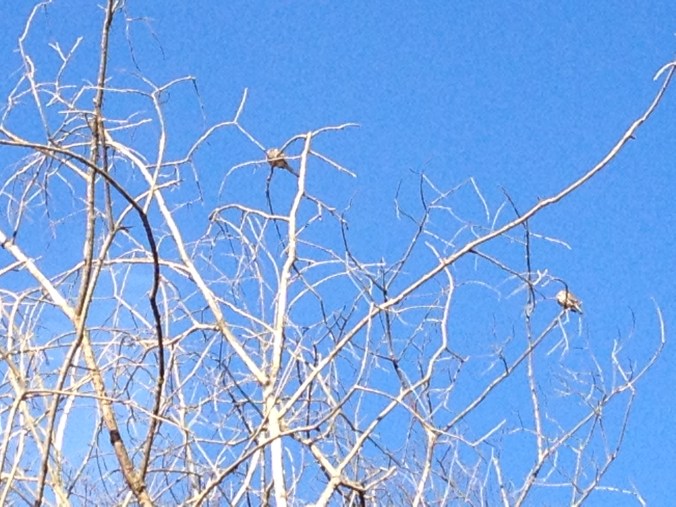
Can you spot the red-winged blackbird? iPhone shot requires use of squinting and imagination

Mourning dove couple, next door neighbors to the blackbird.

Mourning dove couple, next door neighbors to the blackbird. I have plans to buy a camera with a decent zoom lens, but nonetheless treasure these silhouettes against the bright blue sky.
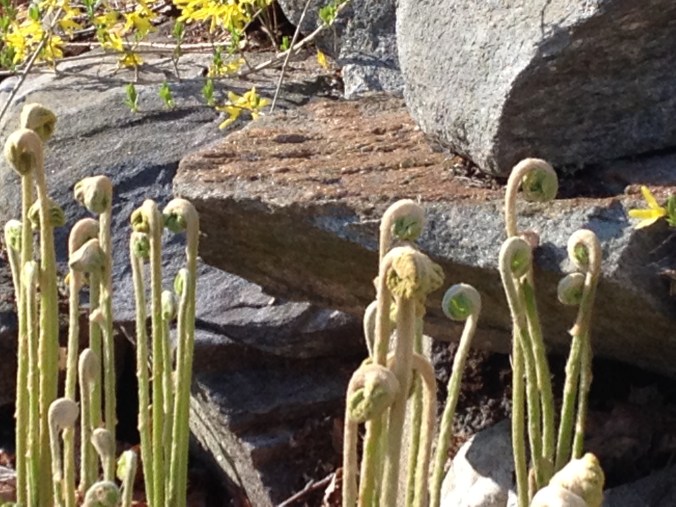
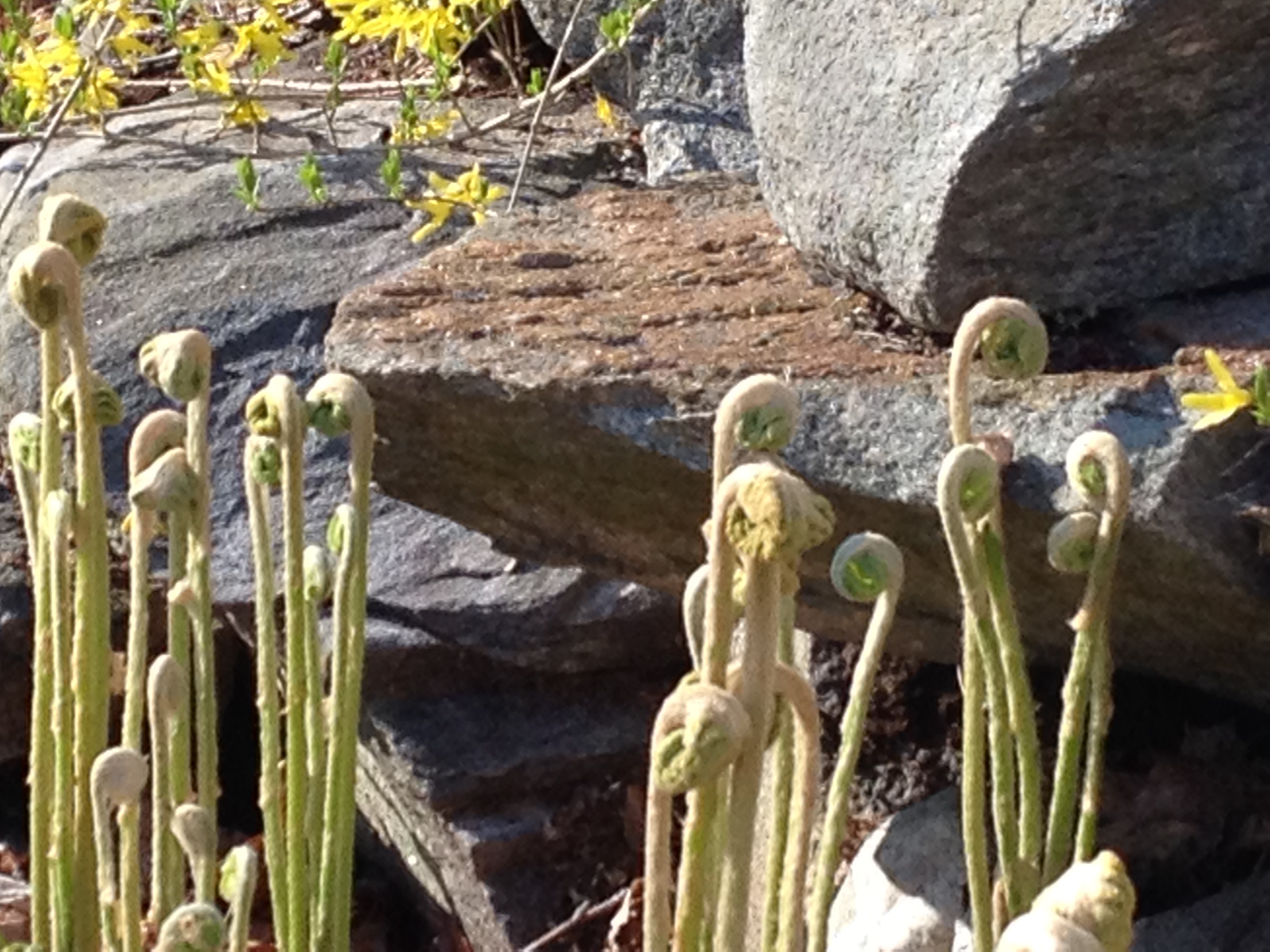
Can't swear that these are bona fide fiddleheads--they seemed awfully big to me.

Can’t swear that these are bona fide fiddleheads, as in good eating–they seem awfully big to me.

What is your working title of your book (or story)?

Cabinet of Curiosity: Talismans from New England Rambles. I’ve also written and self-published Harriet’s Voice: A Writing Mother’s Journey and Things My Mother Told Me (more below about the self-publishing experience). I have participated in an anthology called Get Satisfied: How Twenty People Like You Found the Satisfaction of EnoughThis link leads to a lot of my published articles, essays, and poems. There are a bunch of links here on the blog, too.

Where did the idea come from for these books?

The germ of the Cabinet idea came when my son Gavin was still quite young, and I was (as I still am now) working as a medical writer and writing creatively on the side. I carried an acorn home with the idea that I’d bring something home from each walk and use it as a writing prompt. Many years later, Gavin and I started a shoebox full of specimens we’d gathered during time in nature, a real-life Cabinet of Curiosity. It’s a tangible representation of the experiences and revelations I work to convey in the book.

These days, I am at least 80% focused on nature writing, and the essence of the Cabinet book and my piece in the anthology springs from the powerful experience of connection I have when spending time in nature. But my other works, come to think of it, have been about powerful connections, too. I seem to be always connecting dots in my writing (or trying to).

What genre do your books fall under?

The Cabinet book is definitely nature writing, with some essence of memoir blended in. Harriet’s Voice  is part memoir, part self-help for writing mothers. Get Satisfied = nature-oriented/reflective essay. BTW I think the essay form is totally underrated!

Which actors would you choose to play your characters in a movie rendition?

My dog Molly is key in the Cabinet book and can be quite girly but also gritty and down to earth–Meryl Streep?? My son gets a lot of mentions, too–can’t recall any 13-year-old actors who could do Gavin justice.

What is the one-sentence synopsis of your book?

OK–excellent marketing practice for me. Have to do it in third person, imagining I am a gushing but sincere blurb writer featured on the back of the book (PS also breaking the rules and writing 2 sentences. I am more Wolfe than Hemingway): Each walk-inspired essay from Katherine Hauswirth hands you a significant talisman from nature that you can turn over thoughtfully in your palm. Her meditative reveries reflect on the deep connections between what we experience outdoors and our day-to-day existence as humans.   

Will your book(s) be self-published or represented by an agency?

Agency, for sure. Know any good agents??

My first self-published book, Things My Mother Told Me , was almost forced upon me–I won an essay contest and the prize was a self-publishing contract. I see it primarily as a family keepsake, although it was a fortuitous exercise that taught me I actually CAN write a book. Harriet’s Voice is a love letter to Harriet Beecher Stowe and a letter of encouragement to writing mothers. I sometimes wonder if I should have held out for traditional publishing but after some positive feedback and false starts with publishers/agents was antsy to get the book out of my system. Self-publishing Harriet allowed me to move on to Cabinet! But I respect the traditional publishing world and the quality that it (often) demands. I want to join that club!

How long did it take you to write the first draft of your manuscript?

Cabinet is still in progress. It’s been nearly 2 years and  I have, thankfully, picked up speed. I recently won the honor of Edwin Way Teale Artist in Residence, and I await details on which summer week  I will get to live where the incomparable Teale did, and write without interruption in such an inspiring setting. I expect to be wildly prolific during this heavenly interlude!

What other books would you compare this story to within your genre?

That question is always a tall order. Dare I say it might be in the vein of Pilgrim at Tinker Creek, if Pilgrim were written in fits and starts by a busy, distracted, sandwich-generation, insomniac, working mom who was nearly obsessively jealous of Annie Dillard’s time by herself at the creek?

Who or what inspired you to write this book?

My shelves are crammed with nature books, and I’d be hard pressed to pick one or two volumes that spoke to me most. I consider each one a precious gift–so many meaningful voices have come before me. What inspires me most, actually, are the many walks I take. When they are long enough, and when I am in a deeply listening frame of mind, ideas roll in like welcome waves.

Thanks again to Laurie Baxter for this excuse to expound! For the next leaps and bounds in the blog hop, I nominate Shawndra Miller, and Jean and Gabe of PocketMouse Publishing. I reserve the right to later invite more hopping good writers.
Deep River: It’s in the Stars

Orion, of course, is a constellation.

From Wiikipedia

From Wikipedia


But it’s also a very rich read: a nature/environmental magazine, voted America’s Best Environmental Magazine by The Boston Globe. I am thrilled to see my writeup of Deep River, CT, featured on their Place Where You Live page!

Morning with Raptors (Soundtrack included)

One morning recently, when it was just barely light, I stopped the electric toothbrush to listen. Unseen, coming from a tree over the garage, an Eastern Screech Owl cried. I am a truly amateur bird watcher and listener, so I had only a faint idea about what I was hearing. But the nice thing about being an amateur these days is that you have a world of resources just a few key strokes away. To me, the screech sounded like half whinny, half screaming woman—it sent a chill of alarm through me before I figured out that it was a raptor. Here’s a link to the audio. The dramatic, human quality of the call reminded me of the start to Mystery on PBS years ago (the part of this video where the helpless woman is crying in distress from atop, for some reason, a large tombstone. Creepy, with Edward Gorey graphics.)

I loved the unexpected treat of this unseen visitor. That owl sat on the same branch, I think, where Gavin had once spotted a juvenile bald eagle, in all its magnificence, looking down at our garage. (we have mice and chipmunk visitors to the garage—has the word spread in the bird of prey community?). I was so impressed I had to try a poem that day (it’s at the bottom of this post).

What was it about this particular Saturday morning that had the raptors showing themselves to me? A half hour after the Screech Owl, I was only two blocks into my walk when I pulled out my iPhone to try to record a Red-Shouldered Hawk at the very top of a tall pine. My friend Chris paused her own walk to stare up and take photos with me, and I had a new appreciation for nature photographers/videographers. Of course, I had no zoom lens, but to even get just a recognizable profile I had to wait, patiently, until the guy (or gal) turned his/her head. And I started to feel like the bird was intentionally withholding its call now that I was trying to capture it. I got a neck cramp watching and waiting, but finally it graced me with its song and I hit the “record” button with success. Here’s a link to hear what the hawk sounds like (my free version of WordPress won’t let me upload videos, but I am quite proud of my own recorded song). Here’s the best picture I managed (as handy as the phone camera is, I am putting a compact camera with zoom on my wish list):redShoulderhawk

Last year, Gavin and I attended an Audubon Society “Owl Prowl”—a nighttime walk in the freezing cold led by an expert birder and caller. The only owl we saw and heard was the baby one they were rehabilitating inside—I think it may have been another Eastern Screech (I remember its fluffy ear tufts). But it was endlessly amusing to witness this 50- or 60-something woman expertly contorting her vocal chords to cry out like an owl. I don’t remember her doing the Eastern Screech call though—that would have been an impressive feat. I see there’s another Owl Prowl in the works (this one in Milford, CT, but, for locals, I bet others will be scheduled soon—watch the Audubon Web sites).

And this strays from the raptor topic, since I’ve never seen a raptor at my bird feeder, but Project FeederWatch, an opportunity to be a citizen scientist and tune in more to birds even as the winter weather zooms in (an initiative by Cornell Lab of Ornithology and Bird Studies Canada) is underway. Participants are asked to select 2 feeder watch days at least a week apart, and record what they see. If you get into it, winter also brings the Great Backyard Bird Count in February 2015. I am not a cold weather lover but the distraction of birding makes it a much more enriching time for me!

Wishing you your own morning with raptors, for it truly is a gift to be visited by these magnificent creatures.

Should I remember anything of this day,
it will be the bald eagle on bare branch
framed against the Sunday afternoon sky

Watched me watching him,
nearly motionless,
incongruous in his largeness

Stayed during my afternoon nap
(perhaps he had one too),
screeched as I roused,
just before he flew

I searched each limb from
every pane of my own aerie

Found him again between
the spaces in this poem

Aster Place Comes to CT

Astor Place in New York (Cooper Union building) by David Shankbone

Astor Place in New York (Cooper Union building)
by David Shankbone

I went to school in Manhattan for a while, and Astor Place meant a street in Greenwich Village, named after the incredibly wealthy John Jacob Astor.


Aster Place in Deep River

Aster Place in Deep River

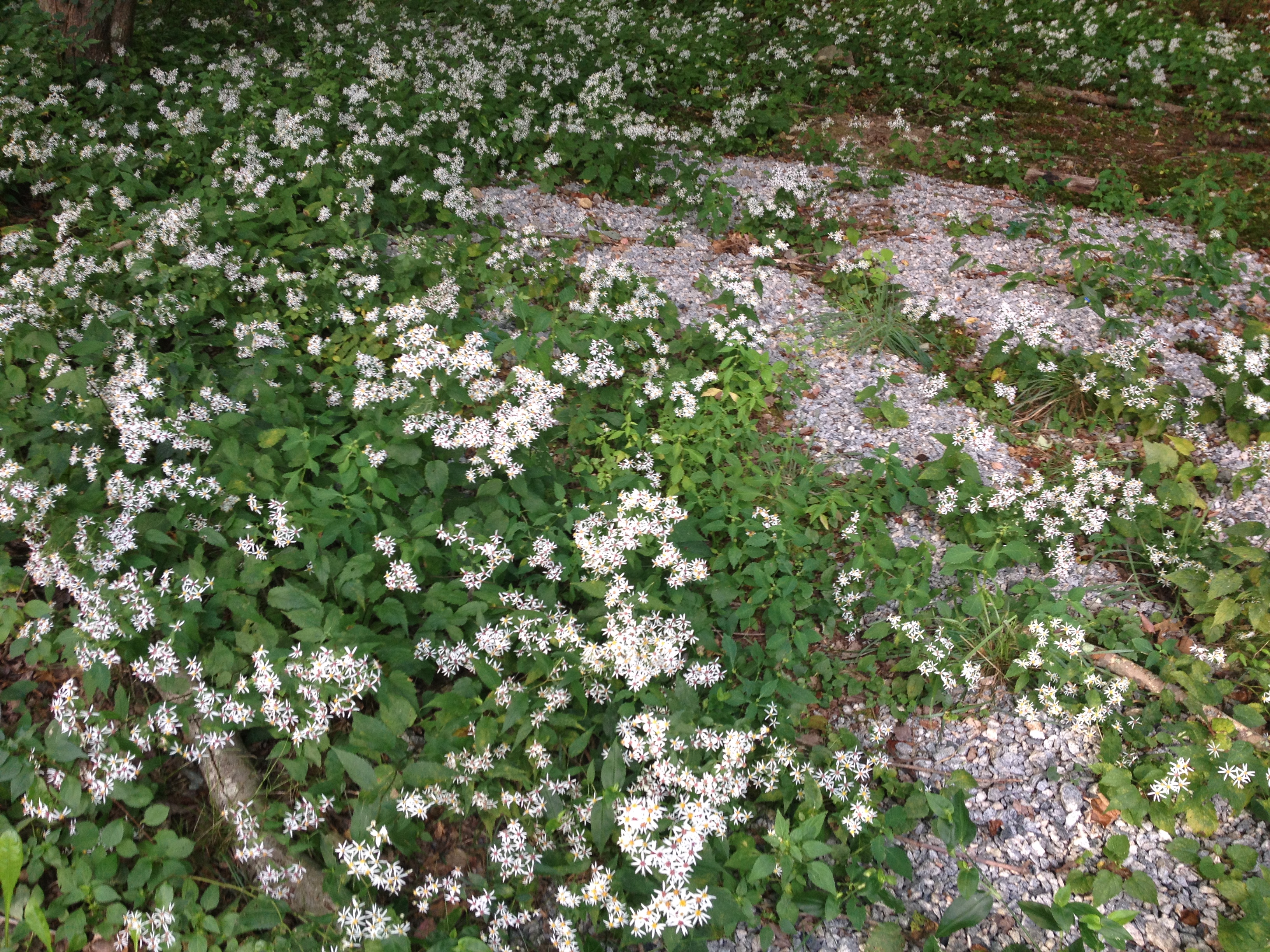
When I pulled up my driveway earlier this week, I nearly rubbed my eyes to check my vision. Beyond the comforter and sheets bobbing on the clothesline, and further back, beyond the French drain to the mossy, moist part of the yard, was a sea of white stars. Uncountable asters had grown up, seemingly overnight. We’d never planted them; they just are; a visitor that comes every year as autumn approaches.

Toward the end of last autumn I picked a brownish, aged aster and placed it in a cobalt blue vase. My husband tossed it, thinking it was a bud that had stagnated from neglect. But I saved it because, even well past its prime, it had a modest, stalky beauty, well preserved. It was stalwart after summer ebbed, and I had to give it credit for its staying power.

The common name for the aster flower, which can bloom in white, blue, or purple, is the Michaelmas daisy, so named because it coincides with the feast of St Michael the archangel, according to Herbs Treat and Taste. The site also tells me that Virgil, some years before the start of AD (or Common Era), wrote about the flower, alluding to its use on holy shrines. I treasure the timelessness of these words nearly as much as I do gazing down out our bumper crop of stars:

There is a useful flower
Growing in the meadows, which the country folk
Call star-wort, not a blossom hard to find,
For its large cluster lifts itself in air.
Out of one root; its central orb is gold
But it wears petals in a numerous ring
Of glossy purplish blue; ’tis often laid
In twisted garlands at some holy shrine.
Bitter its taste; the shepherds gather it
In valley-pastures where the winding streams
Of Mella flow. The roots of this, steeped well,
In hot, high-flavored wine, thou may’st set down
At the hive door in baskets heaping full.

Rich in Raspberries

2014-07-31 07.10.08

I’ve got to give my son Gavin credit for this blog’s title, and top billing in this week’s photo, too. He mused aloud that we were “rich in raspberries” as we industriously filled two sandwich bags with our picks from a tangle of roadside bushes. They were a bit of breakfast, and later, at the close of the day, dessert with whipped cream.

We had to consult a friend to be sure the berries we saw springing up everywhere were safe. Our Backyard Foraging book neglected this particular species, and I was seriously afraid that there might be imposters that looked and smelled like wild raspberries but were actually an artfully disguised malevolent toxin that would leave us gasping for breath. But once we got the all clear, the worst thing that happened was a little patch of poison ivy on Gavin’s arm, a small price for the juicy pleasure of the experience.

On the way up the hill to our best picking spot, we saw a wealth of small birds and a duet of deer, and realized that they, also, were probably relishing the seemingly unceasing red harvest. Something about eating right from the bush, and about sharing the joy with a bevy of creatures, made the berries taste that much sweeter.

Amidst the satisfying pick, I also felt sad when thinking about how removed from the land most of us have become. On the other hand, there remains a stalwart cadre of faithful kitchen gardeners, and foraging seems to have picked up in many sectors, to me a powerful sign of the collective desire to reconnect with the good earth. Recently, I took great pleasure in the book Closer to the Ground, particularly relishing its tales of a family’s catches from the Pacific Northwest waters and coastline.  I thought back to a piece I wrote years earlier surrounding an older book by Nelson Coon, called Using Wayside Plants. Coon was inspired by William Miller, a hobo who dug himself snug places to sleep below the snow, tapped sugar maples with hollowed elderberry twigs, and chewed black birch bark to stave hunger. The read was rich with recipes for sorrel and nettle soups, ink cap mushrooms dug from the roots of trees, clover bloom vinegar, elderberry waffles, and the piece de la resistance —Irish Moss Blanc Mange.

I’ve never had the pleasure of tasting this dish, but I see that Coon’s Irish Moss dessert wasn’t as rare and exotic as I imagined—Fannie Farmer included it in her famed early 20th century cookbook  and a much more recent Block Island cookbook  also put it on the menu. I love the Haiku-like simplicity of how the recipe starts:

Gather fresh moss on the beach.
Rinse well in cold water and
Spread in the sun to dry.

Whether I’ll ever gather sufficient moss and stick-to-itiveness to make such a dish happen, I can’t say. But it does make me appreciate the abundance of both land and sea, and long for the harvest that happens so much less often these days at the individual level, but is there for the taking. The satisfaction it yields is as filling as the food itself.

(A shout out here to my nephew Will, too, who has inspired me with his artful foraging! I still want a mushroom lesson).