Preserves and Professional Parks

path in woods startMy friend Chris asked me recently about my week-long nature writing residency at the Trail Wood memorial preserve, and the first two words that came to mind were “life-changing.” I reveled in the chance to be in nature alone for extended periods, to contemplate, to write and rewrite, to read the treasured words of Edwin Way Teale in his very home, his very office—a sacred place to me! For the first time ever, I used up the camera storage in my iPhone. This blog isn’t big enough to contain the wealth of images, so I’ve scattered a select few throughout the post.

butterflyfuzzy mushroom lichenOf course, Trail Wood had many creatures and plants that I don’t see every day. The Beaver Pond became my favorite destination, and one morning I watched one of the beavers having an early swim. I took photo upon photo of insects in both meadow and forest, but I wasn’t usually swift enough to capture the many birds digitally. I looked forward to daily sightings of the woodchuck who lived near the house. My suburban New York roots showing, I sang to myself in the woods and carried pepper spray just in case the reported resident bear didn’t like my performance. (Maybe the bear wasn’t as exotic as it seemed. There have been several reported sightings in Deep River neighborhoods recently!)

Teale cabinAn absolute gift of the preserve was its undisturbed quality. But another gift I took away from my time there is the practice of really looking and listening even in places that haven’t had the benefit of such thoughtful stewardship. I  take small walks around the office park where I work, not by any stretch a nature preserve. Still, I smile at the abundance of Carolina locusts behind the buildings (who don’t seem to be doing any noticeable damage), and the occasional spotting of a raptor, bright bird, dragonfly, or hornets. I look down into the wetlands below the tall hill. Once in a while, I see a deer. Just once, I rescued a young raccoon who was clattering around in the nearly empty dumpster, watching from a distance as he climbed the long birch limb escape ladder I’d lowered for him.

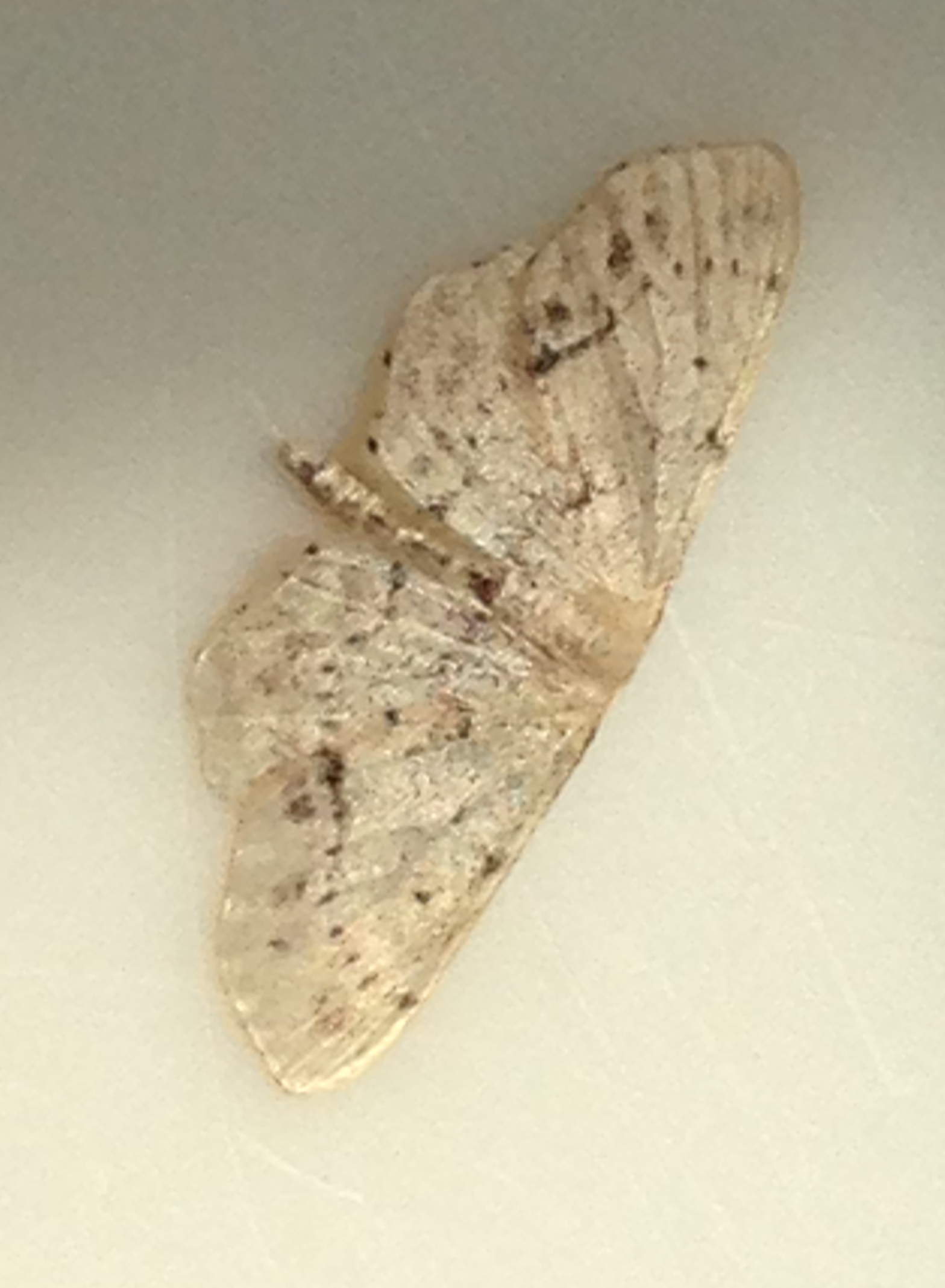
Just the other day, I snapped a picture of a delicately decorated moth (looked like the oversized Oriental vases my grandfather had around his house) who turned out to be an ailanthus webworm moth. I love it when nature comes right to my door!

alianthus web worm

While staying at the Teale home I was drawn to a book of Mr Teale’s that I hadn’t read before: Days without Time. The edition on the study shelf was dated 1948, just 3 years after his son David was killed in World War II. Teale’s introductory words ring so very true:

The fall of the tree, the swoop of the hawk, the tilt of the buzzard in a windy sky, the song of the hermit thrush at evening, the opening of a windflower, the eddy of a woodland brook—all of these are events for days without time. They might have occurred during any one of a thousand or ten thousand years. Ticking clocks and factory whistles have little to do with the eternal recurrence of these eternal themes.

Something for me to remember after my New Hampshire vacation, chock full of walks in shallow streams and visits to waterfalls: when the “factory whistle” is again in play, nature doesn’t live only in preserves or the areas we think of as great sightseeing locales. It is everywhere. With eyes and ears wide open, every day is a new chance to notice it, to give it the full attention that it deserves. With that attending we find ourselves more connected and more alive.

Moths, Mushrooms, and Umwelt

Lately, I’ve been reading Central Park in the Dark, by the same author (Marie Winn) who wrote Red Tails in Love. Her reports of a robust animal and insect world thriving right in midtown Manhattan are such a comfort to me. And they remind me that, with nature, there is always much more going on than what we notice at a casual glance.

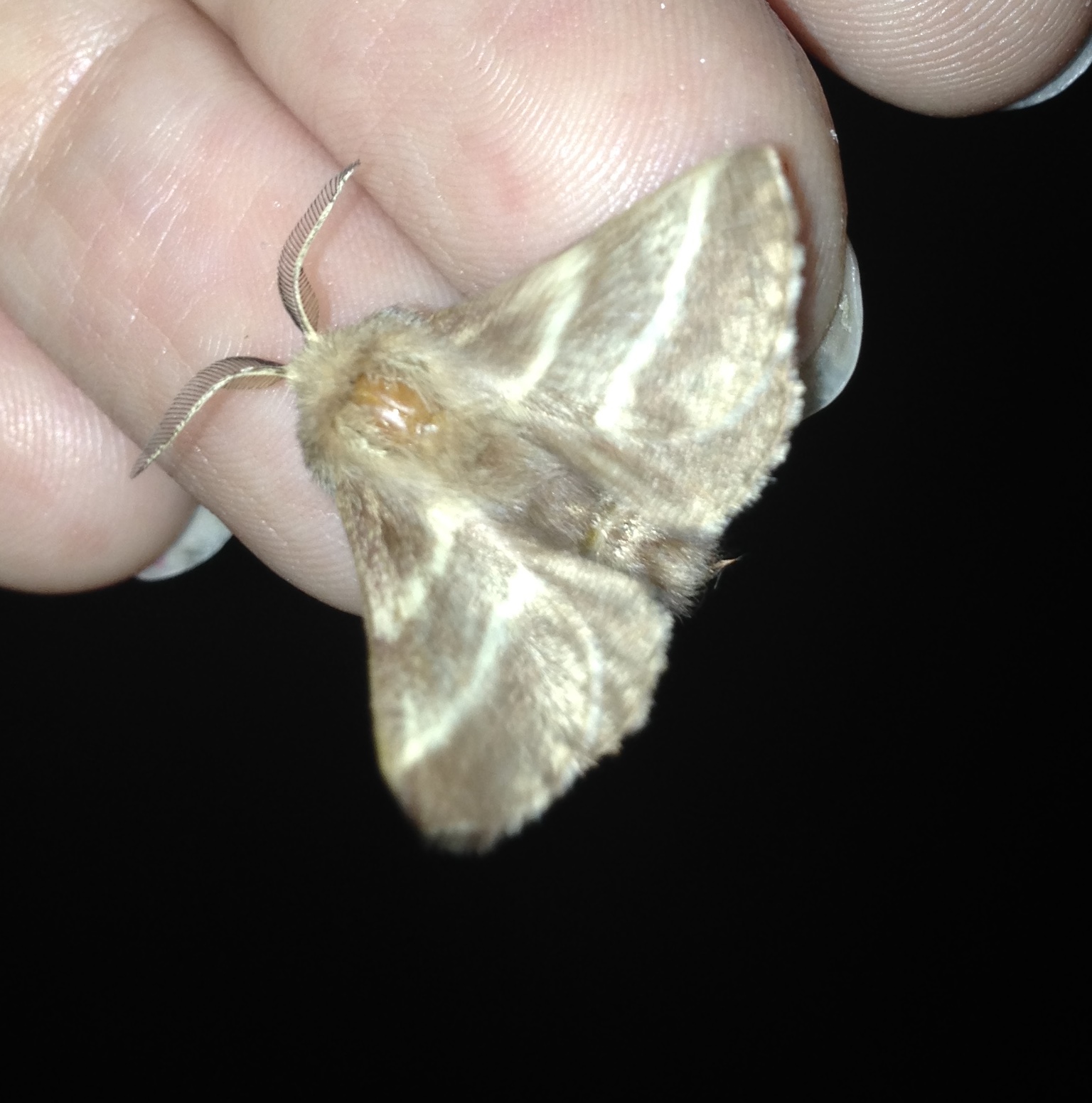
white mothTake moths, for example. They have always loved my porch, but this year they are finding their way inside more, to the grow light that overhangs my modest crop of hydroponic tomatoes. They flitter their way into the sink way too often—are they seeking hydration or just attracted to the water’s glimmer? In any case, I have made valiant, if not always successful, efforts to rescue them. The antique milk can on the porch has become a moth rehab facility–a place where they go to dry out. Bonus fact, which I learned after writing a poem about moths alighting on my arms: they crave the salt in our skin! We might not think as kindly of them if they found ways to extract it the way female mosquitoes, or ticks, access what they find to be our most alluring qualities.

iridescent moth

I was reminded, however, by the Central Park book that most moths’ lifespans amount to less than a few weeks. This greatly saddened Gavin, so I told him about something else that I had learned about: the idea of umwelt. A musty but lovely second-hand book I found, The View from the Oak (Judith and Herbert Kohl), talks about a term used by another nature writer “to describe the world around a living thing as that creature experiences it.” Imagine, for example being an ant, living your whole life in a particular corner of a field, pebbles like boulders to you and your vibratory sense your only means of communication. That experience, that way of living and perceiving, is your ant umwelt. I apply that same concept to time, too. The moth that lives its full few weeks is likely not comparing itself with humans and crying over its piteously short stay on the earth. We humans have our own time umwelt, so we don’t tend to bristle over the lifespans of Galapagos Giant Tortoises, who live for upwards of 100 years (or Ocean Quahogs, who can live for 400+!).

Another umwelt I found myself wondering about was the perspective of the slug. Of course, I’ve seen slugs here and there throughout my life, but only on a recent jaunt at Fountain Hill did I notice groups of them sitting on mushroom caps.

mushroom with several slugs

Can you see the 4 slugs feasting?

How long did it take them to climb up there? Was it like summiting a high mountain peak? It made me wonder if slugs eat mushrooms, and the article I found from a 2010 issue of Fungi was called What We Don’t Know About Slugs and Mushrooms—the scientists seem pretty clear that slugs eat fungi but not so clear on specifics. One of the problems is that it’s the mushrooms, not the slugs, that are usually the subject of any the available photos that might prove slug fungus consumption, and most of the time photographers don’t want to photograph the slugs at all. It’s not just with most photographers that slugs get a bad rap—and I understand that they eat our garden greens—but I do think that if they were better looking they might be treated better. Hopefully in their own little slug umwelt they don’t realize how their slimy looks count against them. But if they do, Gavin reminded me that there is an Ugly Animals Preservation Society that they can turn to for support.

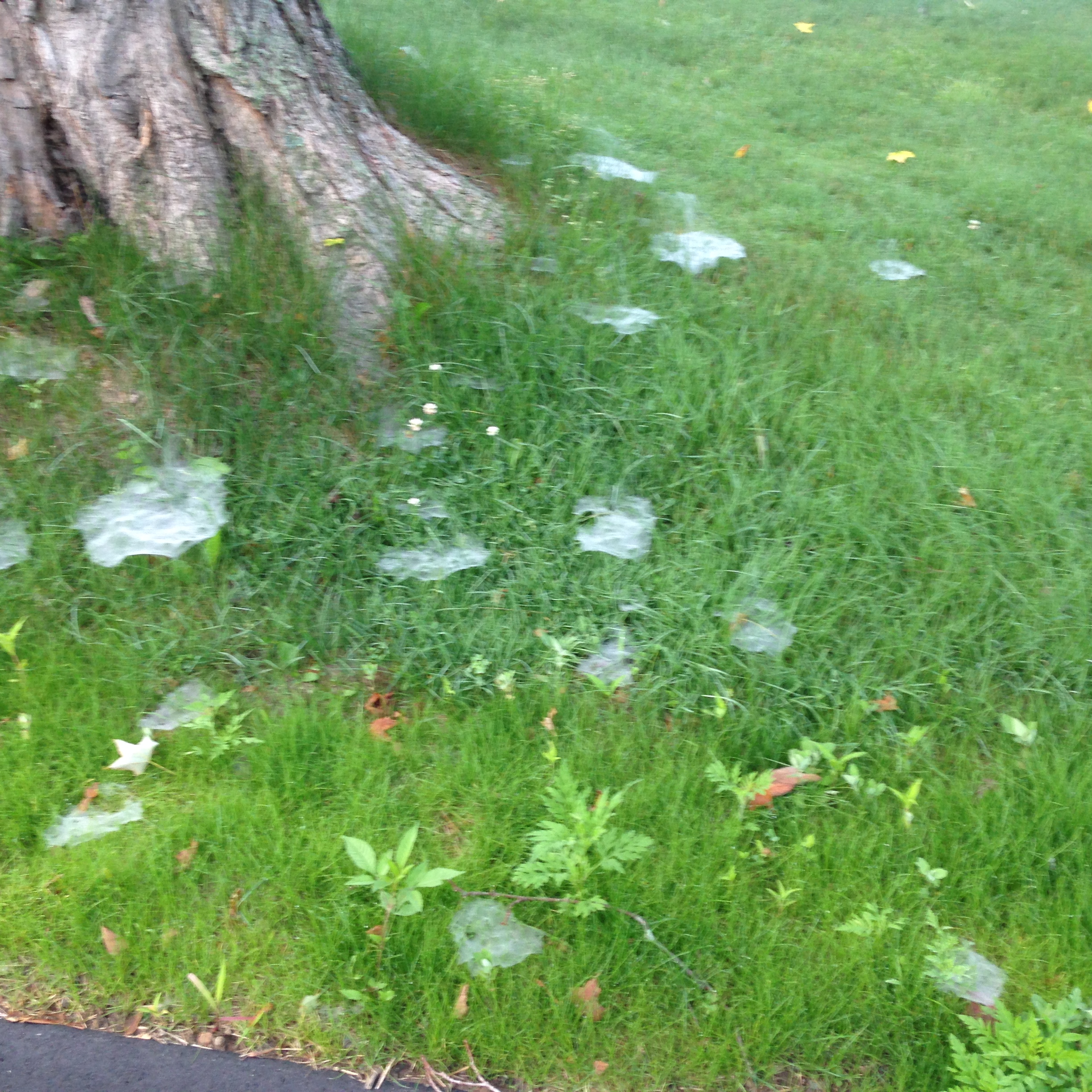
July is such a rich, moist, spilling-over-with-abundance time in Connecticut. This morning I counted 13 rabbits on my walk down to Town Dock, and funnel webs from the grass spiders, highlighted by the dew, dotted nearly every lawn—an uncountable array of spider condo complexes. My own, personal umwelt is a happy one because of this.

I count at least 19 funnel-shaped webs in this small patch of lawn

I count at least 19 funnel-shaped webs in this small patch of lawn

Once Around

Both this weekend and last, I suffered from painful cases of the Shoulds. My long scroll of a TO DO list seems to be ever lengthening, and at the top are household chores by the dozen.

So I compromised last Sunday. I would walk Molly for 1 hour only. It takes an hour to foot the mile to town and back with this beagle who follows her nose, who strains with vigor and passion at the leash whenever a new smell beckons.

We set out at sunrise, treated to a Hallelujah Chorus from (mostly unseen) birds in the thick pines that line our yard. I admired a garter snake on the asphalt and right after that the prolific leavings from a neighbor’s cottonwood tree (it looked like snow was lining her driveway!). I later learned that “nuisance” cottonwoods have a lot going for them, and a proud history. I also read up on why birds sing at dawn, or at least the latest attempt to explain this mystery. (Science fully respected, but I think I’ll always experience the chorus as the ultimate hymn of joy and praise).

bobwhiteMy compromise morphed into a substantial ramble when I learned that Tom and Gavin were also up early. They met Molly and me at town dock, where we had breakfast and gazed out at the water. We watched a heron and tailed a pair of Northern Bobwhites ambling along Kirtland Street. We climbed the gradual hill to Mount Saint John, a stately fixture of Deep River since 1904. Tom photographed a bluebird peeking from its house on the grounds.

BluebirdHouse

MollyonWall

There were still Shoulds to return home to. In the hours following this happy indulgence, I caught up with the laundry and restored some sanity to our household environs. But I am so glad I took that 1-hour walk that turned into a 2-plus hour walk. And that later, we all took the drive to Middletown so we could learn about caterpillars and gather some phenology (the study of what happens, and when, in nature) data, courtesy of the Connecticut Forest and Park Association. Phenology matters, much more than housekeeping and crossouts on the daily To DO list, and here’s a brief article that gives examples of why.

Why I Walk Early, and (Blog) Hopping into Spring

fallenRobin's eggI love my walks, so often crammed in before work hours or weekend errands. I love it when creatures become more prolific with the warmer temperatures and start to cross my path again in greater numbers. So many are busy making new families now. Soon flowers will be easier to find just by following my nose, and moths of every size and shape will crowd the front porch, greeting me when I first step out in the morning.

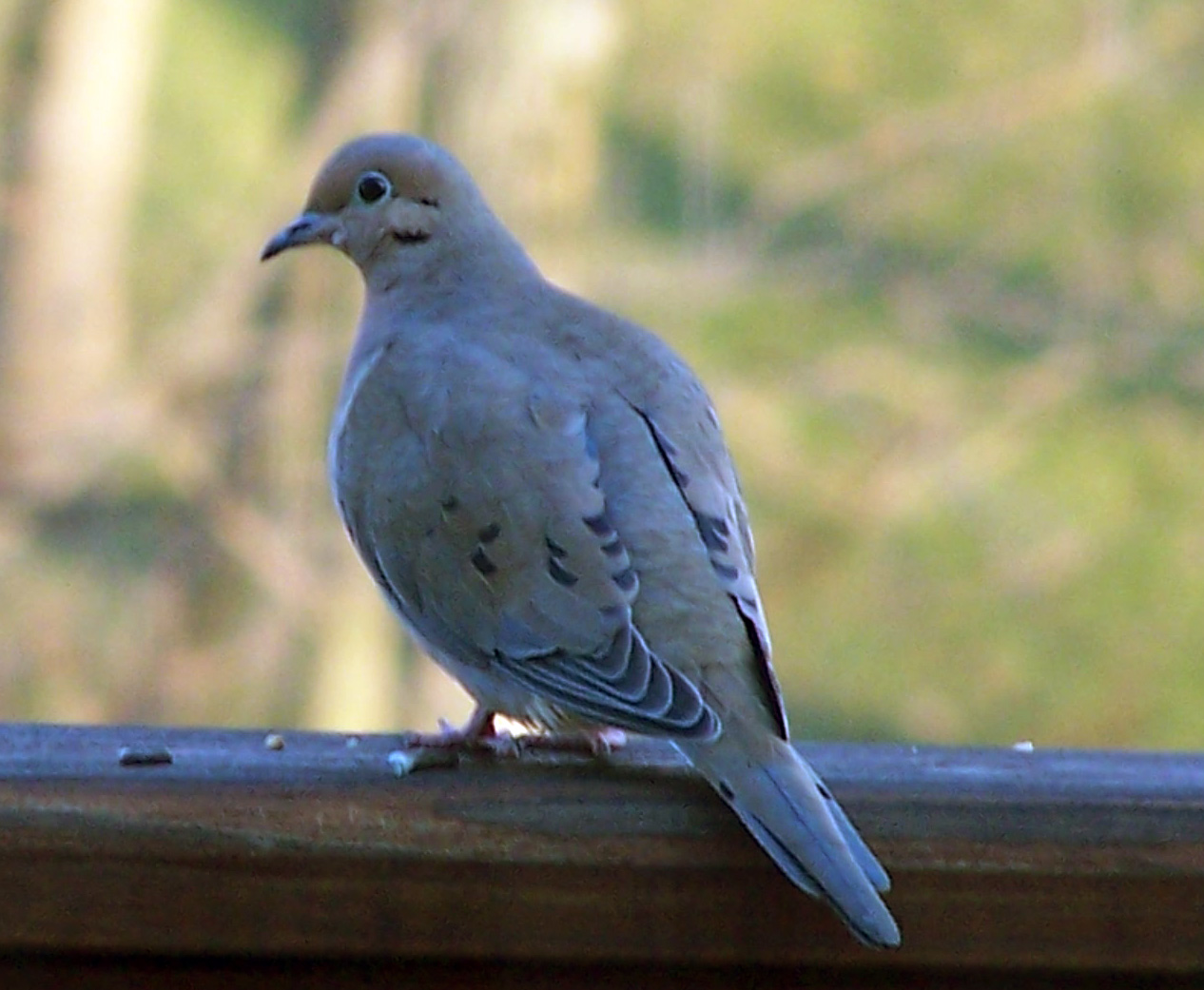
Mary Oliver wrote a stunning poem called Why I Wake Early, and that ran through my mind the other day before work, as I watched a rabbit’s white tail hop away into the brush, looked for fallen eggshells, and snapped photos of mourning doves and a red-winged blackbird in the branches. Why I walk early also merits an ode. Although I could wax wordily on about it, I’m keeping my explanation here mostly in the form of pictures for a change.

After the pictures comes my participation in a blog hop interview–my nomination was bestowed by my writing group friend Laurie Baxter, and it gives me a chance to say a little bit about my burgeoning book and my writing life. Laurie is a prolific writer, and I’ve enjoyed every play and story that she’s shared with me, as well as her boundless enthusiasm for words and life, generally. Most recently I indulged in her Kindle Veronica Mars novella–a fun and engaging read that brought me back to my guilty pleasure watching the series on Netflix. I’d love to be as spunky and clever as Veronica, or as Laurie, for that matter! I think this blog hop is mostly for fiction writers, so am honored that my mostly nature writing self has been welcomed in. (You know how that goes, though–now I am letting other nature-centric writers into the party!) Interview after the pictures, along with nominations for the next blog hoppers!

2015-03-29 16.13.51

Early spring visitors.

Pratt Cove. I spotted a vulture on a nest. The birders lining the railroad tracks told me that's what it was!

Pratt Cove. I spotted a large bird on a far-off nest, flapping its wings. The birders lining the railroad tracks told me it was a vulture!

Can you spot the red-winged blackbird. iPhone shot requires use of squinting and imagination
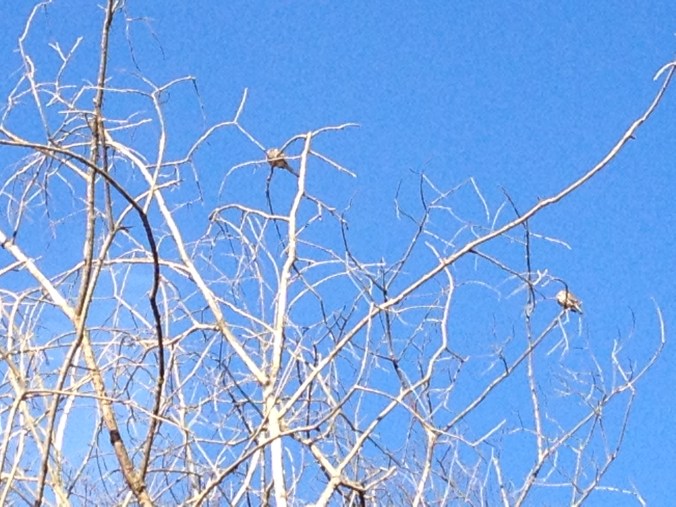
Can you spot the red-winged blackbird? iPhone shot requires use of squinting and imagination

Mourning dove couple, next door neighbors to the blackbird.

Mourning dove couple, next door neighbors to the blackbird. I have plans to buy a camera with a decent zoom lens, but nonetheless treasure these silhouettes against the bright blue sky.
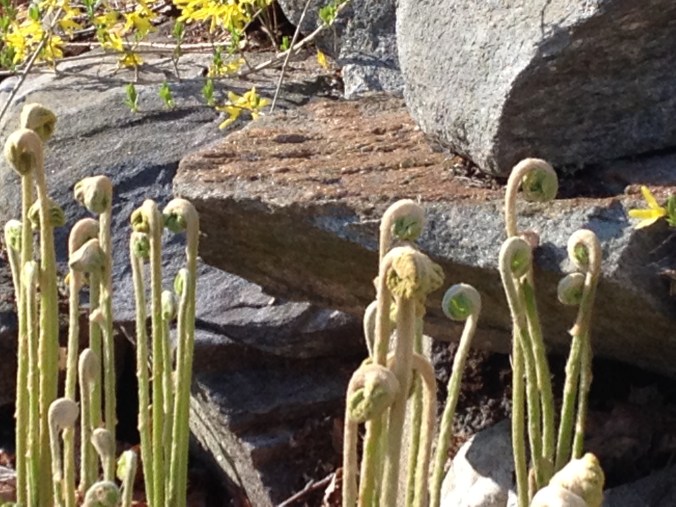
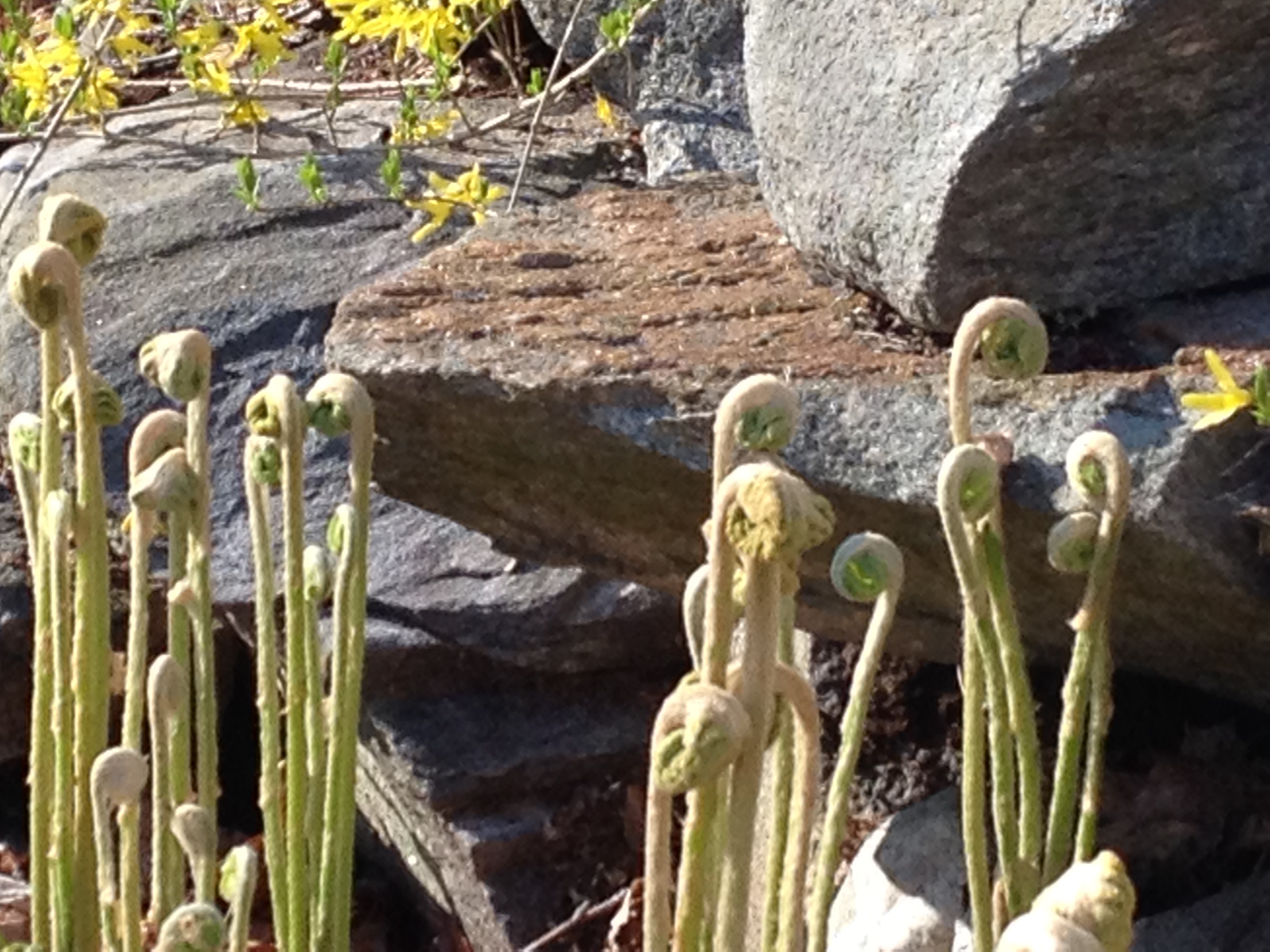
Can't swear that these are bona fide fiddleheads--they seemed awfully big to me.

Can’t swear that these are bona fide fiddleheads, as in good eating–they seem awfully big to me.

What is your working title of your book (or story)?

Cabinet of Curiosity: Talismans from New England Rambles. I’ve also written and self-published Harriet’s Voice: A Writing Mother’s Journey and Things My Mother Told Me (more below about the self-publishing experience). I have participated in an anthology called Get Satisfied: How Twenty People Like You Found the Satisfaction of EnoughThis link leads to a lot of my published articles, essays, and poems. There are a bunch of links here on the blog, too.

Where did the idea come from for these books?

The germ of the Cabinet idea came when my son Gavin was still quite young, and I was (as I still am now) working as a medical writer and writing creatively on the side. I carried an acorn home with the idea that I’d bring something home from each walk and use it as a writing prompt. Many years later, Gavin and I started a shoebox full of specimens we’d gathered during time in nature, a real-life Cabinet of Curiosity. It’s a tangible representation of the experiences and revelations I work to convey in the book.

These days, I am at least 80% focused on nature writing, and the essence of the Cabinet book and my piece in the anthology springs from the powerful experience of connection I have when spending time in nature. But my other works, come to think of it, have been about powerful connections, too. I seem to be always connecting dots in my writing (or trying to).

What genre do your books fall under?

The Cabinet book is definitely nature writing, with some essence of memoir blended in. Harriet’s Voice  is part memoir, part self-help for writing mothers. Get Satisfied = nature-oriented/reflective essay. BTW I think the essay form is totally underrated!

Which actors would you choose to play your characters in a movie rendition?

My dog Molly is key in the Cabinet book and can be quite girly but also gritty and down to earth–Meryl Streep?? My son gets a lot of mentions, too–can’t recall any 13-year-old actors who could do Gavin justice.

What is the one-sentence synopsis of your book?

OK–excellent marketing practice for me. Have to do it in third person, imagining I am a gushing but sincere blurb writer featured on the back of the book (PS also breaking the rules and writing 2 sentences. I am more Wolfe than Hemingway): Each walk-inspired essay from Katherine Hauswirth hands you a significant talisman from nature that you can turn over thoughtfully in your palm. Her meditative reveries reflect on the deep connections between what we experience outdoors and our day-to-day existence as humans.   

Will your book(s) be self-published or represented by an agency?

Agency, for sure. Know any good agents??

My first self-published book, Things My Mother Told Me , was almost forced upon me–I won an essay contest and the prize was a self-publishing contract. I see it primarily as a family keepsake, although it was a fortuitous exercise that taught me I actually CAN write a book. Harriet’s Voice is a love letter to Harriet Beecher Stowe and a letter of encouragement to writing mothers. I sometimes wonder if I should have held out for traditional publishing but after some positive feedback and false starts with publishers/agents was antsy to get the book out of my system. Self-publishing Harriet allowed me to move on to Cabinet! But I respect the traditional publishing world and the quality that it (often) demands. I want to join that club!

How long did it take you to write the first draft of your manuscript?

Cabinet is still in progress. It’s been nearly 2 years and  I have, thankfully, picked up speed. I recently won the honor of Edwin Way Teale Artist in Residence, and I await details on which summer week  I will get to live where the incomparable Teale did, and write without interruption in such an inspiring setting. I expect to be wildly prolific during this heavenly interlude!

What other books would you compare this story to within your genre?

That question is always a tall order. Dare I say it might be in the vein of Pilgrim at Tinker Creek, if Pilgrim were written in fits and starts by a busy, distracted, sandwich-generation, insomniac, working mom who was nearly obsessively jealous of Annie Dillard’s time by herself at the creek?

Who or what inspired you to write this book?

My shelves are crammed with nature books, and I’d be hard pressed to pick one or two volumes that spoke to me most. I consider each one a precious gift–so many meaningful voices have come before me. What inspires me most, actually, are the many walks I take. When they are long enough, and when I am in a deeply listening frame of mind, ideas roll in like welcome waves.

Thanks again to Laurie Baxter for this excuse to expound! For the next leaps and bounds in the blog hop, I nominate Shawndra Miller, and Jean and Gabe of PocketMouse Publishing. I reserve the right to later invite more hopping good writers.

Dream of the Blue Turtles

Courtesy of Seney Natural History Association on Flickr

Snapping Turtle Courtesy of Seney Natural History Association on Flickr

If you are part of my generation you probably remember that my blog’s title is borrowed from the title of Sting’s first solo album.(If you are too young to know who Sting is, go ask The Police . They’ll tell you.)

Anyway, I just learned that the album’s title was inspired by an actual dream. Sting recalled:

I turned to see the head of an enormous turtle emerging from the darkness, followed by four or five others. They were not only the size of a man, they were also blue and had an air of being immensely cool.

I haven’t had any turtle dreams lately, but I’ve had some cool turtle encounters and conversations! For starters, part of the writing sample that helped me win the 2015 Edwin Way Teale Artist-in-Residence opportunity (joyfully awaiting details on my week devoted to nature writing this summer!)  has a snapping turtle in a starring role! Of course, it also reveals that I have a lot to learn.

Had we been a more educated bunch, we might have guessed that this was highly likely to be a female en route to (or from) an egg-laying venture, a mission in which she would dig a hole and deposit her clutch of up to 40 eggs. But I still have the smart phone video footage to prove how clueless we all were. It records us gleefully naming the snapper Phil, after considering Bob and Joe. The only smarts we had consisted of our hands-off policy with “Phil” the fertile female, fearing a sharp and lightning fast removal of our digits. But we adored her from just a little way off, thrilled when she moved her flipper a bit, a sign of life to counter her stoic, stone-like affect in the presence of swarming gnats and humans.

Sea Turtles coverI’ve also been talking with Melissa Gaskill, an expert on sea turtles who has written A Worldwide Travel Guide to Sea Turtles and also happens to be a member of my online nature writing group. It’s rare to find sea turtles in Connecticut, but I am considering a side trip to the New England Aquarium to see Myrtle! She’s been living there since I was just 3 years old!

It’s clear that these creatures—like so many sea creatures right now—need our help and vigilance, and Melissa explains what we can do. Here’s my interview with her. You can see that her passion and expertise started with a simple act of interest and citizen science, with her kids along for the ride!

How and when did you first get interested in sea turtles?

I had my first encounter with sea turtles when spending a summer in Baja California Sur with my three kids. We volunteered to patrol a stretch of beach on the East Cape for an organization that protected nesting sea turtles there. We found and reported a new nest that we later learned contained 87 eggs. After that, I started writing about sea turtles and was fortunate to attend a hatchling release at Padre Island National Seashore, see a Kemp’s ridley nest hatching out in the wild in Mexico, snorkel with green sea turtles in the US Virgin Islands, and dive with them in the Caribbean. After I had the idea of writing a book about all the places you can see these animals and support their conservation at the same time, I’ve volunteered with sea turtle research in Cuba and Mexico and sea turtle conservation in the Yucatan and Guatemala.

Kemp's ridley hatchling

Kemp’s ridley hatchling


Do you know when and where we can find sea turtles in Connecticut?

Connecticut isn’t the most likely place to find sea turtles, unfortunately. You can see a green sea turtle, Myrtle, at the New England Aquarium in Boston. A resident since 1970, she currently lives in the Giant Ocean Tank. The closest place for Connecticut residents to observe nesting turtles or hatchlings would be North Carolina. Of course, there are many places around the world where to see them!

 What can we do/where can we go to learn more about them?

A number of zoos and aquariums have sea turtle residents and educational programs, and there are many conservation organizations working around the world to protect these endangered reptiles. If you’ll allow a shameless plug, I literally wrote the book on places where you can visit or volunteer with responsible conservation programs, and it has a chapter on captive encounters (places that keep only sea turtles unable to survive in the wild, for educational purposes and not profit) and one on organizations working with sea turtles. You can learn a lot from the websites of these organizations.

As you continue to learn about sea turtles, what fact(s) have surprised you most?

One is the astonishing distances some species can travel. Tagging studies have tracked loggerheads swimming from Japan to Baja California, a journey of some 15,000 miles. Leatherbacks can weigh as much as 2,000 pounds and dive up to 3,000 feet deep. Female sea turtles use the Earth’s magnetic field and other cues to return to the beach where they were born to lay their own nest, some 20 or so years later after traveling far from the place to grow up. Each species of sea turtle has a distinctive diet; for example, leatherbacks eat jellyfish and have spines in their throats that help them swallow these slippery creatures; hawksbills eat coral, using their hawk-like beaks to chomp off bits; and green sea turtles are the only herbivorous sea turtles, feeding on algae and seagrass.

What are the biggest environmental concerns affecting sea turtles?

The main threats to sea turtle survival include fishing activity (they become caught in nets or on longlines and drown), direct take of adults for meat and eggs, marine debris (sea turtles die from ingesting plastic, for example, and are injured or drowned from entanglement in old fishing nets and debris), shoreline armoring (seawalls and bulkheads that prevent females from reaching the beach to nest), artificial lighting (it draws hatchlings away from the water and they die from dehydration, exhaustion, predators, or traffic), and climate change (sea level rise inundates nesting beaches, and changes in ocean temperatures and currents is affecting migration and food sources).

What can we do to help with these concerns?

A lot! People can choose sustainable seafood (find regional guides at seafood.org), refuse to purchase products made from sea turtles when traveling abroad, avoid single-use plastics, participate in beach clean-ups, use night-friendly lighting (see darksky.org for guidelines), and reduce their carbon footprint. In addition, when you travel you can support responsible eco-tourism such as beach walks; this makes sea turtles worth more alive than dead.

A hatchling parade

A hatchling parade

Anything else you’d like to share?

Sea turtles have been around for 100 million years – longer than the dinosaurs – yet human behavior has almost wiped them out in the space of a few decades. On the positive side, a large and dedicated group of people work around the world to save them, and we’ve seen a lot of progress. You can be part of this success story!

Bird by Bird

Bird by Bird is the title of Anne Lamott’s revered book, subtitled Some Instructions on Writing and Life, so I couldn’t resist borrowing it for this mini-tale of amateur birding.

The origins of the title, as explained by Lamott, are sweet, and an encouragement for any pursuit, birding or otherwise:

 Thirty years ago my older brother, who was ten years old at the time, was trying to get a report on birds written that he’d had three months to write. It was due the next day. We were out at our family cabin in Bolinas, and he was at the kitchen table close to tears, surrounded by binder paper and pencils and unopened books on birds, immobilized by the hugeness of the task ahead. Then my father sat down beside him, put his arm around my brother’s shoulder, and said, ‘Bird by bird, buddy. Just take it bird by bird.’

I was a bit overwhelmed myself when I sat down to do my part for Project Feederwatch recently. I was not overwhelmed by the task itself, but rather by the realization that it was truly quite difficult to commit to sit for at least an hour at a time, at least 2 days in a row. What does this say about me, and about my life? Well, part of it is a general tendency towards restlessness, but at least in equal measure it speaks to how much there is to do. This is a wakeup call to keep an eye on what is truly important—not just essential “to dos”—some of which are unavoidable–but what actually matters. I’ve decided that the birds matter greatly. Mary Oliver wrote something that resonates with me deeply in this regard, because the experience of attending to them did feel like an act of meaningful devotion:

Attention is the beginning of devotion.

And looking up “attend” in the Online Etymology Dictionary, I realize it means so much more than “show up:”

attend (v.)

c.1300, “to direct one’s mind or energies,” from Old French atendre (12c., Modern French attendre) “to expect, wait for, pay attention,” and directly from Latin attendere “give heed to,” literally “to stretch toward,” from ad- “to” (see ad-) + tendere “stretch” (see tenet). The notion is of “stretching” one’s mind toward something. Sense of “take care of, wait upon” is from early 14c. Meaning “to pay attention” is early 15c.; that of “to be in attendance” is mid-15c. Related: Attended; attending.

I like the idea that I was stretching my mind toward the birds at the feeder, taking care of them, waiting upon them… waiting for them to show me so many moments of joy, and also literally being their waitress (slinging bird hash by trudging through the deep snow to their dining room!) .

What a delight to realize that there are whole communities of birds that are visiting my yard daily, most starting their nests and families and some passing through. And how nice, also, to see fellow bird adorers like me pipe in on Facebook, where I took a poll to figure out if I had Dark-eyed Juncos eating my seeds.

Just 2 hours on 2 snowy days (and, full disclosure, on the first day I was SUPPOSED to be working and not looking out the window every 5 minutes) yielded a great mix, the most exotic being my Kestrel (yes, mine: I feel some possessiveness about her), who was not at the feeder but on a nearby deck post. I was surprised by the 2 types of woodpeckers, who I rarely spot with casual glances around the neighborhood. And, by the way, has anyone noticed that the birds seem to congregate at the feeder when it is snowing? Of course, food is harder to find as it becomes covered up but maybe they also know how gorgeous they look among the snowflakes?. Here’s some more information on birds in cold weather.

One of the nicest moments was the iridescent appearance of our Mourning Doves as they flew down to the ground below the feeder. We see them often in our driveway and I hadn’t before appreciated their beauty in flight.

The Project FeederWatch system asked me to confirm the Kestrel—apparently an unlikely find for my area this time of year. But, yes, I’m pretty sure it was a female American Kestrel (Northern) after checking several Google images. It perched just a little way off from these species:

Mourning Dove

Red-bellied Woodpecker

Pileated Woodpecker

American Crow

Black-capped Chickadee

Tufted Titmouse

White-throated Sparrow

Dark-eyed Junco

Northern Cardinal

I think I need to apply Lamott’s advice to both writing and birding. One word at a time, one gift of a winged moment at a time. I’m looking forward to more Bird by Birding.

BUMPER CROP of Tree Circles

Molly.ROTATE

Fully aware that Molly is sideways (blog options not cooperating), but even from this angle you can see she’s got a taste for burgeoning spring


What joy—enough snow melted so that Molly and I could foot the mile to town without fearing the need to dive into tall snowdrifts should 2 cars come down the narrow street simultaneously! Yes, there they were—a bumper crop of tree circles where before there was only a scant sprouting.

TreeCirclesBridgeSt

As I walked I found myself feeling sorry for those in eternally temperate climes, because they can’t experience the happy release that comes with the long-awaited start of spring thaw. It’s a tenuous joy that comes, because there may be more snow, but maybe that makes the first moderately warm moments even sweeter.

I thought of the Dar Williams song Sometimes Southern California Wants to Be Western New York, and also of my favorite Robert Frost Poem, My November Guest (excerpts from each below):

There’s a part of the country
Could drop off tomorrow in an earthquake
Yeah, it’s out there on the cutting edge
The people move, the sidewalks shake

And there’s another part of the country
With a land that gently creaks and thuds
Where the heavy snows make faucets leak
In bathrooms with free-standing tubs…

…And it wants to have a snow day
That will turn its parents into kids

And it’s embarrassed, but it’s lusting
After a SUNY student with mousy brown hair who is
Taking out the compost
Making coffee in long underwear


My Sorrow, when she’s here with me,
Thinks these dark days of autumn rain
Are beautiful as days can be;
She loves the bare, the withered tree;
She walks the sodden pasture lane.

Her pleasure will not let me stay.
She talks and I am fain to list:
She’s glad the birds are gone away,
She’s glad her simple worsted gray
Is silver now with clinging mist…

Both of these bards remind me of that part of me that loves and welcomes the coldness and barrenness of winter. It is a time for hunkering down and thinking about things and venturing into inner space, and there certainly is a quiet beauty to the bare tree branches and making coffee in long underwear. That being said, it gets OLD for most of us–to the point of familiarity breeds contempt!. And as hardy as I tried to make myself this winter, my natural instinct was to stay off the ice and keep the chill away by donning layers of baggy sweaters and eating warm things.

How lovely to see the world waking up as I am, again alert to what’s going on beyond the confines of my snowed-in street. Long live tree circles, their widening embrace, and eventual disappearance as all the melt goes underground to feed their budding source.

Longing for Tree Circles

We’re sharing a good book in the family. Backyard Almanac  gives an entry on “Northern natural history” for every day of the year. Technically I think the “Northern” to which the author refers is more in the vicinity of upper Minnesota and Southern Canada, but close enough—most of the milestones and species are something to which we here in Deep River can relate.

The entry for March 1 was about tree circles, one of many natural phenomena of which I have probably on some level been aware but hadn’t thought about too much before. Larry Weber writes:

The sunlight reflects off snow, but not off dark tree bark, which absorbs heat from the lengthening light and gently radiates it back to the surrounding snow creating ‘tree circles.’ Snow melt may extend out from the trees…to as much as a foot. On tree trunks, plants like mosses get a peek at sunlight for the first time in months, and animals so long beneath the snow have an opportunity to emerge into fresh air and daylight.

I got excited about impending spring plant life resurrections when I Googled around a bit more about tree circles. A Q &A in an archived New York Times Science section reminds me that “Some emerging herbaceous plants, like those growing from bulbs, produce heat to melt snow in order to more easily break through it in the springtime…This is most famously true of skunk cabbage, Symplocarpus foetidus, likely our earliest-blooming herbaceous native…Some flowering trees also produce heat, likely to melt frost or snow present on their buds.”

I was tickled by the tree circles topic because it’s unique and a little offbeat and warm, but as Ecclesiastes reminds us, there is nothing new under the sun. Here’s a great blog on the same topic, but I can’t be too jealous of these authors getting there first, because they are a pretty fascinating bunch who seem ultrasmart and science-y in ways that I will never be (but deeply admire).

Unlike these scientists, I will not be intensely studying or positing theories of evolution or alternatives to it. But I do have something in common with them.  I will be PAYING ATTENTION, especially to those tree circles. (I checked today—there are not yet ripples of shallower, soil-tinged  snow popping up around my pines and oaks. But temperatures are gradually trending in an encouraging direction).

About attention, Mary Oliver said it best:

Attention is the beginning of devotion.

Olivia Newton-John also said (well, sang) something well, about being utterly and Hopelessly Devoted. That’s how I feel about spring at this point. Hopelessly devoted to the promise of tree circles and the spring that will expand around us as they move outward into the sun.

Deep River: It’s in the Stars

Orion, of course, is a constellation.

From Wiikipedia

From Wikipedia


But it’s also a very rich read: a nature/environmental magazine, voted America’s Best Environmental Magazine by The Boston Globe. I am thrilled to see my writeup of Deep River, CT, featured on their Place Where You Live page!

Cold, Refreshing Spring (and a Free Books Footnote)

GavinColdSpring_010115It’s hard to believe that it’s been nearly a whole month since we awoke to 2015, and that first chilly day of the year had us at our traditional New Year’s place: Cold Spring, New York, a village on the Hudson (most photos here courtesy of my husband Tom, except where noted).

Although I continue to work on becoming a hardier example of our species, this wasn’t a prime day for long strolls in the out of doors. The wind whipped off the river; the temperatures were in the teens, maybe even single digits with the wind chill. But even so, we were bundled up and enjoyed a brisk 25 minutes or so on the coast, where we picked through driftwood on the beach, watched long cargo trains pull by on the opposite shore, and marveled at the abundance of spiky, otherworldly-looking water chestnut seed pods, sometimes called devil’s heads, that had washed up onto the beach. (I learned from The Incidental Steward by Akiko Busch that water chestnuts, introduced in the late 1800s as exotic ornamentals, have become quite the invasive species, choking our rivers and spreading at alarming rates).

Water Chestnut Seed Pod From peppergrasss on Flickr

Water Chestnut Seed Pod
From peppergrasss on Flickr

After a warm and happy lunch at Le Bouchon we took a meandering drive along the river, happening upon a herd of deer grazing in an overgrown meadow.

DeerColdSpring010115

The day was refreshing and lively but indubitably COLD. We didn’t leave the car when we capped the day with our traditional drive through Hubbard Park on the way home, to see the Christmas lights display.

I’m not sure whether two sightings since that cold first day of 2015–and before the recent mega snowfall–should be taken as signs of the havoc that climate change is predicted to bring, but, regardless, they have made me more hopeful about spring coming. In the Wal-Mart parking lot, Tom and I were treated to the spectacle of two sparrows mating alongside the curb—cute, fascinating, and shocking all at the same time. I looked up house sparrows (although I can’t swear this was the variety we saw—didn’t want to create any sparrow scandals by snapping an incriminating photo), and sure enough, they sometimes begin mating as early as January. And then, on a drive along beautiful River Road from Essex to Deep River, I saw an osprey on an aerie. According to the CT DEEP page, they aren’t supposed to return from Southern hunting grounds until March. Then again, you get some early birds in every crowd. I may have to nudge the Essex OspreyCam operators so they can activate the live feed again.

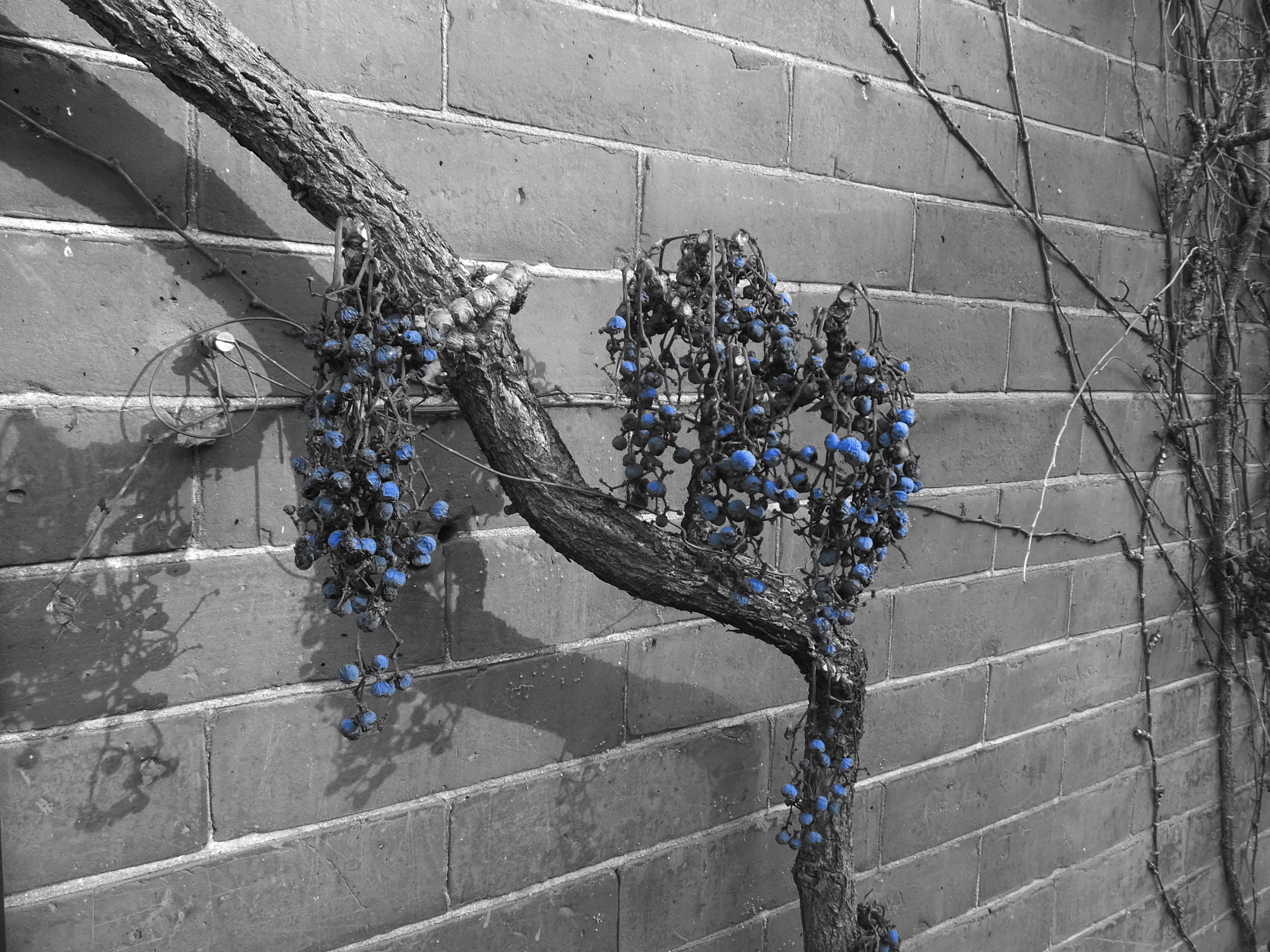
It’s been good for me to learn this winter that life does go on outside even when my instinct tells me to stay where it’s warm and dig in deeper beneath the blankets. Did you know that when birds go South, it’s more about finding food than getting away from the cold? I want to keep them close–I trudged through nearly 2 feet of snow yesterday to get to the bird feeder and was rewarded by an audience (from afar) with several female cardinals. I wonder if they would have liked these berries that managed to display themselves so artfully in Cold Spring:

ColdSpringBLUEBerries_010115

(PS: For those who perked up at “free books” in the title, I am giving away some copies, while they last, of Get Satisfied: How Twenty People Like You Found the Satisfaction of Enough, in which I have a piece published; as well as Harriet’s Voice: A Writing Mother’s Journey. I’m afraid I can’t pay postage but happy to get copies to locals or work out some kind of prepaid mailing arrangement for those afar).